
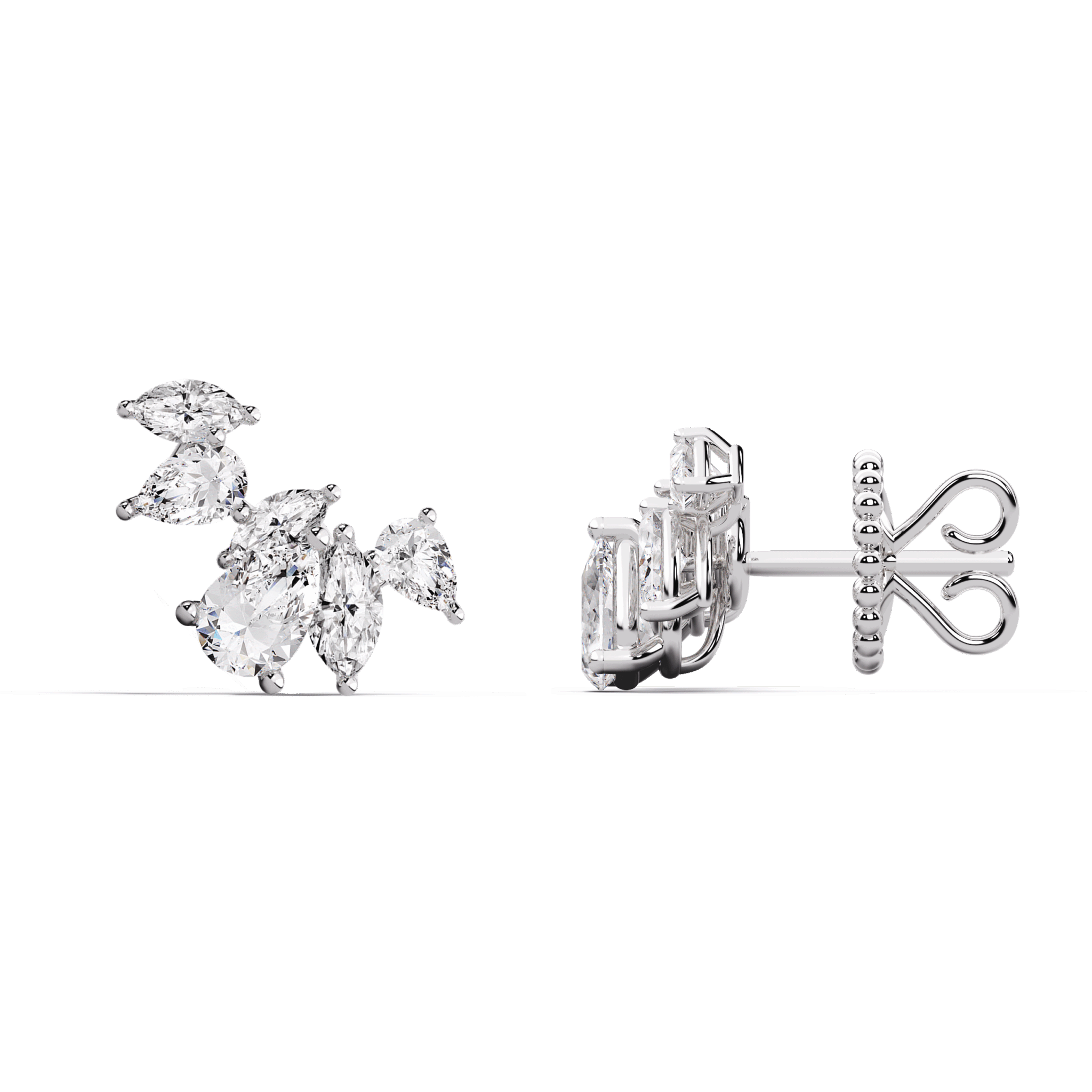
Introduction: The Room, the Light, and the Choice
We buy light to fight the dark. In crowded feeds and cold glass cases, classic jewelry pieces flare like beacons against the day’s gray. Most buyers decide in under two minutes, yet returns still rise on “sparkle mismatch” reports—an old problem with new scale. The room is loud, the lighting is harsh, and the camera makes lies look easy (filters, angles, edits). So why do so many “perfect” stones go flat the moment the door clicks shut?

Picture a winter lobby. A pear-shaped stone hangs on a thin chain, its point aimed like a compass. The spec sheet reads clean: carat, clarity, a good polish grade. But the crown angle is sleepy, the table too wide, and the pavilion hides a narrow window. The center goes dark. Fire collapses. Scintillation stutters. You try to love it anyway—because the paper promised more. The truth is simple and blunt: surface lines hide depth mistakes. And depth mistakes change light. Let’s step out of the haze and test the cut with colder eyes. Next comes the part where we strip the pear to its bones—so we can actually choose one that lives in real rooms.
Hidden Angles: Pain Points That Shape the Pear
Why does the bow-tie haunt the pear?
When shoppers choose pear cut diamonds, they expect bloom, not a bruise of darkness. But the bow-tie effect is a stubborn guest. It sneaks in when pavilion depth and table percent fall out of sync, or when symmetry drifts along the long axis. A thick girdle at the tip can blunt the point; a thin one can chip under a simple prong. Fluorescence can cool the face under UV-heavy lights, while a sleepy crown angle drains fire. Traditional advice says “trust the certificate.” That helps, but it’s not enough. A certificate can’t show how a pear breathes when you tilt it toward a window. Look, it’s simpler than you think: the cut decides how light enters, bounces, and leaves. Everything else is theater.
Another quiet failure: windowing. When facets leak light straight through, the center looks watery. The stone seems bigger, yet emptier—funny how that works, right? Under a loupe, you may miss it. Under your kitchen LED strip, you won’t. Old guidance says “avoid obvious inclusions.” Better rule: study the light map. Check the long-side symmetry. Test for point integrity with a modest bezel or a guarded prong. Ask for tilt videos under mixed lighting, not just a single glamour shot. The goal is simple: stable scintillation across the belly, no dead zone across the bridge, and a point that survives real wear.

Calibrating Tomorrow: Tools That Tame the Pear
What’s Next
We move from hunches to instruments. Modern cut analysis uses ray-trace models, optical symmetry maps, and ASET-style imaging to plot light return. It is not magic; it is geometry. A 3D scan can highlight misaligned facet junctions along the pear’s shoulders, where the bow-tie often begins. Machine vision compares pavilion facets for angular drift; micro-adjusted lighting (D50 and high-CRI) shows how fire and brilliance trade in real scenes. Against old habits—one loupe, one lamp—this is a different league. And yet it stays human: you still tilt, you still look. But now the numbers back your eyes. This matters for both peak stones and grounded, everyday classic jewelry—settings, chains, and rings that see rain, heat, and rough tables.
Here is the quick synthesis. Old advice focused on paper stats. We shifted to the living behavior of light across the pear’s axis. We added checks for bow-tie strength, windowing risk, and tip durability. To choose well, use three metrics: first, measured light return uniformity across center and shoulders; second, axis symmetry within tight tolerance so scintillation doesn’t “blink” as you move; third, practical protection at the point via bezel or guarded prong without over-thickening the girdle. Hold to these, and style will follow function—and yes, that matters. In this forward view, the best pear isn’t loud; it’s consistent in bad light and honest in good. That is how heirlooms begin, and how daily wear survives. For a calm, methodical take on the craft, see Vivre Brilliance.