
Introduction — Why this problem matters to your shop
Have you ever stood over a busy CO2 laser and wondered: is this smoke safe to breathe? That question hits hard when I see small shops running machines without proper capture. A laser fume extractor sits right in the workflow, pulling smoke and particles away from people (and machines) — and yet many teams still rely on weak filters and patched ductwork.
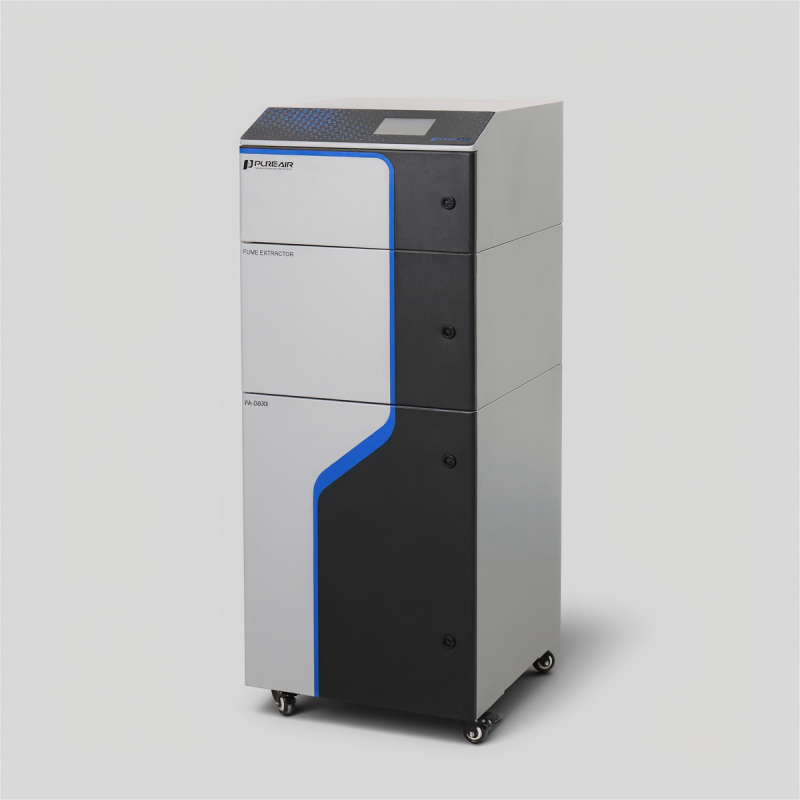
Here’s a quick data point: poor fume control raises VOC and particulate counts dramatically in minutes, and consistent exposure adds up — fast. So what should you do next — upgrade, maintain, or rethink the whole setup? I’ll walk you through the choices and what they really mean for your team, your warranty, and your shop floor morale. Ready to dig in? Let’s go — clearer air ahead.
Deeper Layer: Why traditional systems fall short for CO2 laser fume extractor users
I want to be blunt: many standard setups simply don’t cut it. A typical CO2 laser fume extractor installation often starts with good intent but ends up compromised by poor placement, wrong filter media, or underestimated airflow needs. When I inspect shops, I find clogged pre-filters, undersized fans, and duct runs that kill suction. Those are not subtle failures — they are predictable.
Let me break it down technically so you can see the weak links. First, filter media choices matter: HEPA removes fine particulates while activated carbon captures odors and VOCs. But if the airflow rate is off, neither filter reaches full effectiveness. Next, the fan or blower must match pressure drop across filters — otherwise you get recirculation and leakage. Finally, maintenance cycles are often ignored. One dirty filter can halve performance in days.
Why do systems fail?
Short answer: mismatch and neglect. Designers pick pumps and fans without measuring actual static pressure. Installers route ductwork like spaghetti. And operators assume the unit is “working” so they skip checks. Look, it’s simpler than you think — measure, match, and maintain. When you do, the extraction works as promised.
Forward-Looking: New principles and what to watch for next
What’s changing now is practical: smarter sensing, modular filters, and better specs for capture velocity. New designs emphasize targeted capture at the nozzle, variable-speed blowers that respond to load, and filter stacks optimized for both particulates and gases — ideal for a modern CO2 laser fume extractor. I like these shifts because they solve real pain points, not just add bells and whistles.
Technically, the best systems integrate simple sensors that track differential pressure and VOC levels. That lets teams switch to predictive maintenance — not waiting for a smell or a drop in suction. Edge computing nodes are starting to appear in higher-end units to log data, and power converters now support quieter, more efficient motors. These changes cut downtime and lower filter cost over time — measurable wins you can count.
What’s Next?
Look ahead: aim for systems with clear metrics (capture % at source, airflow rate, and filter life). Try a case trial if you can — deploy one upgraded extractor on a busy line and compare air quality logs. I’ve seen shops reduce complaints and extend filter life by months — funny how that works, right? The takeaway: choose tech that’s proven and easy to service.
To wrap up, weigh capture performance, energy draw, and maintenance simplicity. I recommend three evaluation metrics: measured capture efficiency at the nozzle, mean time between filter changes, and real-world noise/energy profiles. Use them to pick a system that fits your workflow and people. If you want a straightforward partner in this, check solutions from PURE-AIR. I’ve used and recommended their kits when teams needed reliable results — and I’ll stand by that choice.