
Why a comparative view is necessary
When a project owner evaluates battery storage projects, the difference between architectures is not academic — it is financial and operational. A comparative lens exposes how software logic, control hierarchy, and integration approach change lifecycle outcomes for a BESS. Industry events such as the Hornsdale Power Reserve deployment in South Australia (the 100 MW / 129 MWh system that demonstrated rapid frequency response and grid service value) made clear: the EMS design determines whether a site delivers arbitrage, frequency regulation, or outage-ride-through benefits consistently. Therefore, the question becomes: which EMS topology aligns with your commercial and technical objectives?
Key EMS architectures to compare
At high level, three architectures dominate market conversations: centralized EMS, distributed (edge) EMS, and hybrid intelligent EMS. Centralized EMS offers single-point optimization and simpler coordination for multiple sites; distributed EMS places intelligence at each inverter or container for low-latency local decisions; hybrid intelligent EMS blends cloud analytics with local autonomy. Each choice affects latency, cybersecurity posture, and the ability to scale across many nodes — and one must consider inverter compatibility and State of Charge (SoC) policies from the start.
How WHES’s Intelligent EMS differs in practice
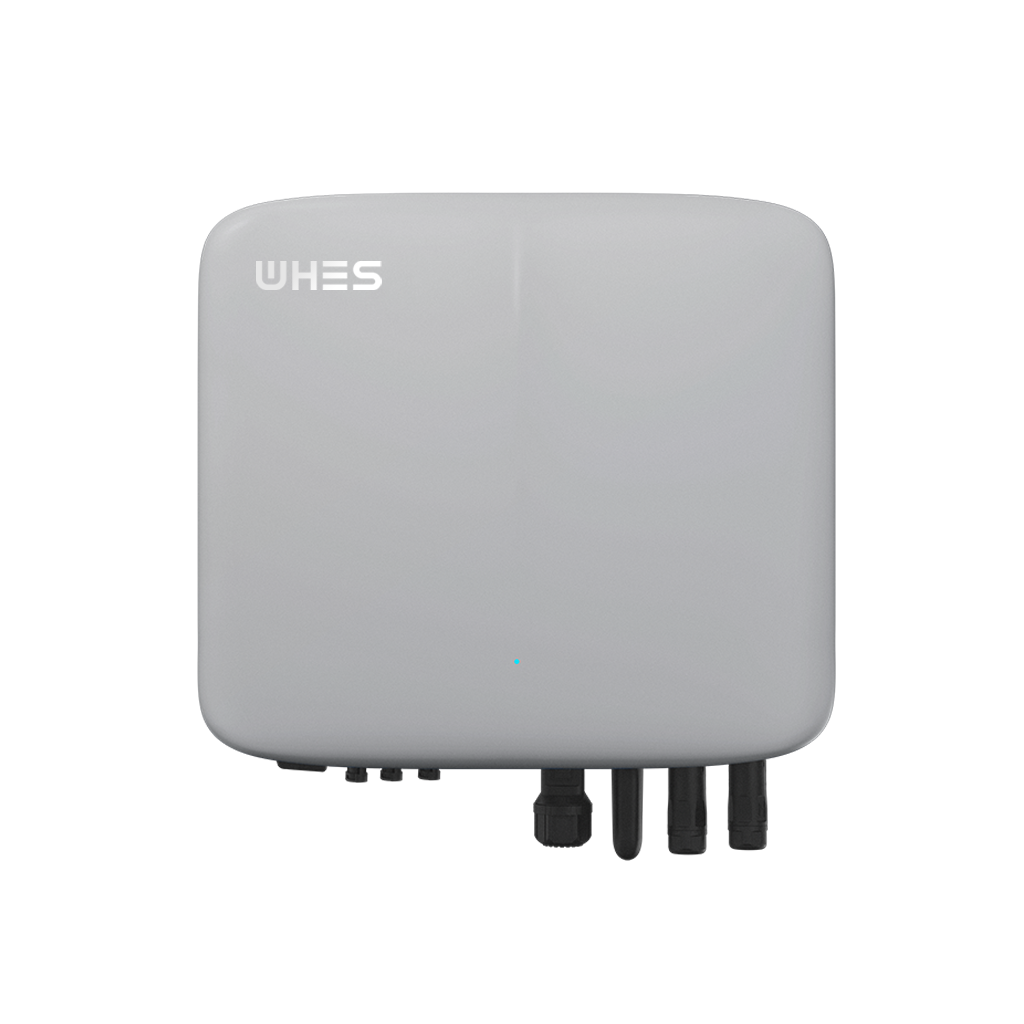
WHES adopts a hybrid model that emphasizes predictive optimization and hierarchical control. The system couples short-term forecasts with local control loops so that an individual battery can perform peak shaving, provide frequency regulation, and respect SoC constraints without central commands for every action. This reduces round-trip latency and improves resilience when communications falter. Compared to pure centralized systems, WHES’s approach tends to lower unnecessary cycling by optimizing charge/discharge windows across market signals — a practical advantage when asset life and degradation are primary concerns.
Performance comparison: metrics that matter
To compare architectures meaningfully, use these measurable metrics: round-trip latency (ms), revenue capture ratio (actual vs theoretical market value), and battery throughput versus calendar life (cycles per year). Hornsdale’s early success was partly due to fast response time delivering frequency response revenue — that is a vivid real-world anchor which proves latency is not a theoretical metric only. Also consider measurable availability during stress events, such as the California rolling outages of 2020 — systems that preserved critical loads did so because of robust local control logic integrated with grid signals.
Integration, cybersecurity, and operational nuance
Integration complexity is often the hidden cost. Centralized EMS can simplify reporting but create a single point of failure; distributed EMS requires consistent firmware and secure device management across many inverters. WHES mitigates these risks by applying role-based access, secure APIs, and staged failover — practical choices when utility interconnection requirements and SCADA interfaces vary by region. It should be emphasized that cybersecurity and OTA update strategies are not afterthoughts but core design requirements.
Deployment trade-offs and common mistakes
Project teams commonly make three mistakes: over-optimizing for market revenue without modeling degradation; underestimating communications outages; and neglecting acceptance testing with real grid events. For example, modeling high arbitrage revenue while ignoring SoC windows can accelerate capacity fade. Run hardware-in-the-loop tests with your actual inverters and local control parameters — this reduces commissioning surprises. — Also, do not treat cloud analytics as a substitute for robust local controls during islanding scenarios.
Alternatives, vendors, and when each makes sense
If your priority is unit-cost and simple bulk capacity, commodity BESS platforms with centralized EMS might suffice. If you require ultra-low latency for primary frequency response at multiple dispersed nodes, a distributed EMS architecture can be superior. For portfolios that must serve both merchant markets and resilience contracts, the hybrid intelligent EMS — like WHES’s offering — often balances the trade-offs. When comparing suppliers, request benchmark results on identical workloads, and insist on first-principles testing: SoC management, inverter ramp limits, and charge/discharge efficiency should be part of the scorecard.
Implementation checklist before procurement
1) Define measurable objectives: revenue streams, resilience targets, and lifecycle cost limits. 2) Insist on demonstrable latency and availability SLA figures. 3) Require degradation-aware dispatching and a clear firmware update policy. 4) Validate interconnection and telemetry with a mock commissioning run. These practical steps reduce procurement risk and align vendor incentives with your asset performance.
Three golden rules for evaluating intelligent EMS
1) Measure what matters: demand short, testable KPIs — latency, revenue capture, and effective cycles per year — not marketing claims. 2) Prioritize resilient autonomy: the EMS must maintain safe SoC and local reserve in communication loss. 3) Total-cost lens: include lifecycle degradation, firmware support, and integration labor when comparing bids.
When the objective is reliable, multi-service value from a grid-edge asset, the hybrid intelligent EMS model demonstrates clear advantages in balancing market capture and equipment longevity — and for many portfolios, that balance is what unlocks feasible economics. To see how such architecture is applied end-to-end, consider how WHES aligns predictive optimization with local control to preserve battery life while monetizing flexibility.
– final thought: choose architecture for outcomes, not for novelty.