
Framework introduction
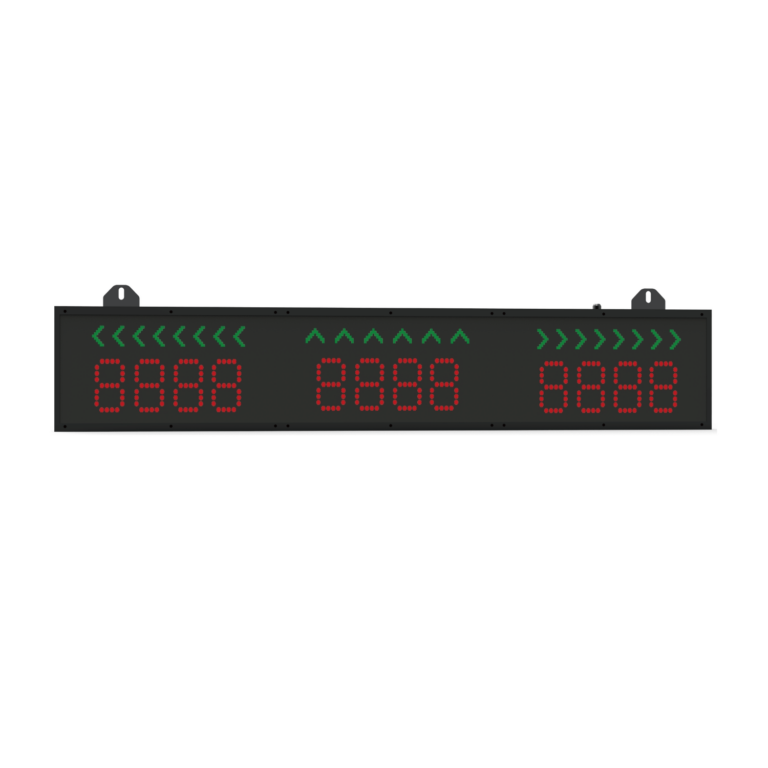
This framework delivers a clear set of stages suppliers can apply to reduce rework, shorten procurement cycles and improve deployment reliability; the approach treats each project as an engineered system rather than a sequence of purchases and handovers. Early definition of interfaces and performance baselines is essential; a modern installation will typically include a parking sensor array, dynamic signage and a parking guidance system that must be specified alongside hardware and software contracts.

Core pillars of the framework
Five pillars organise the planning process: requirements engineering, procurement architecture, technical validation, integration and commissioning, and lifecycle support. Each pillar contains concrete deliverables: a requirements traceability matrix, procurement scorecards weighted by total cost of ownership, factory and site test plans, integration data maps, and maintenance schedules with spare-part lead times.
Requirements engineering and stakeholder mapping
Identify actors (operators, maintenance crews, city traffic managers, end users) and map their needs to measurable system behaviours: detection rate, latency to occupancy update, visible signage update rate, API throughput and security requirements. Produce use cases such as peak-hour turnover measurement and event-mode reservation handling. Capture non-functional constraints early: power availability per bay, conduit routes, and existing network topologies.
Procurement architecture and vendor selection
Create procurement modules that separate commodity items from system-critical items. Purchase sensors, cabling and signage as commoditised lots; evaluate gateway, controller and cloud components by interoperability and firmware policy. Use a weighted evaluation matrix that includes life-cycle replacement cost and firmware update commitments. Contract clauses must define acceptance criteria and penalty scales for missed commissioning milestones.
Technical validation and test planning
Define Factory Acceptance Tests (FAT) and Site Acceptance Tests (SAT) with clear pass/fail metrics. Test detection accuracy against a known occupancy dataset, validate end-to-end message latency, and run simulated fault injections to confirm failover behaviour. Include cybersecurity checks: certificate management, TLS for backhaul links, role-based access control for operator consoles and a documented patching procedure.
Integration, commissioning and real-world anchoring
Integration requires a data-flow diagram showing message schemas between sensors, gateways, parking management platform and payment or city systems. Practical programmes in cities such as Singapore have emphasised early API specification and cross-agency testbeds; those pilots exposed the need for shared data semantics and staged roll-outs. The planning that underpinned those trials can be referenced when specifying a city parking management system, because the tested architectures address routing, privacy and real-time aggregation at scale.
Common pitfalls and mitigation
Suppliers routinely underrate cabling scope and power provisioning, omit firmware update windows from contracts, and accept vague SLAs for detection accuracy. Mitigate these by including measured power budgets, scheduled maintenance windows in contracts, and sample-based acceptance tests for sensor accuracy. Require suppliers to provide a documented rollback plan for firmware upgrades and spare-unit provisioning directly linked to mean-time-to-repair targets.
Evaluation metrics and procurement KPIs
Use quantifiable KPIs: mean time to commission (hours per 100 bays), uptime percentage for guidance signage, detection accuracy at peak occupancy, average time-to-repair, cost-per-responsive-bay over five years and integration time for third-party APIs. Track these metrics through a project dashboard during procurement and for twelve months after handover to validate assumptions used in supplier selection.
Alternatives and decision guidance
Choose modular, vendor-neutral components when the operator anticipates multi-vendor maintenance. Select integrated vendor suites when delivery speed and single-responsibility contracting are priorities. Prefer edge-first architectures when latency or intermittent connectivity is an operational constraint; prefer cloud-first when analytics scale and centralised updates are the priority. Make selection decisions against the quantified KPIs above, not solely against unit price.
Conclusion
Apply this framework to convert vague requirements into testable specifications, to make procurement decisions defensible, and to reduce installation and post-commissioning surprises; the result is a structured, auditable procurement path that aligns technical decisions with operational outcomes, an approach reflected in the practices of AKE Parking.