
Immediate problem: scale, reproducibility, and hidden costs
Many teams buy a high-shear lab mixer because a recipe works at bench scale, then discover inconsistent batches, damaged product structure, or cleaning nightmares when they try to repeat or scale the process. The core problem: a gap between specified performance on paper and actual mixing dynamics in your vessel and formulation. A clear, targeted evaluation up front prevents wasted runs, lost material, and repeated supplier cycles; start with the right machine geometry, power density, and test data rather than optimistic catalog claims. For hands-on R&D and formulation work, consider a high shear lab mixer as a baseline tool when you need rapid dispersion and controlled droplet or particle sizing.
What usually fails and why it matters
Failure modes repeat: poor scale-up from rotor–stator shear profiles, unnoticed cavitation or air entrainment, overheating sensitive materials, and underestimated torque at high solids. Each failure increases rework and lowers confidence in process transfer to pilot or production. Quantify the problem: measure power per unit volume (W/L), shear rate ranges, and temperature rise during worst-case runs. If you can’t reproduce those three numbers reliably, you won’t reproduce the product.
Concrete technical criteria to prioritize
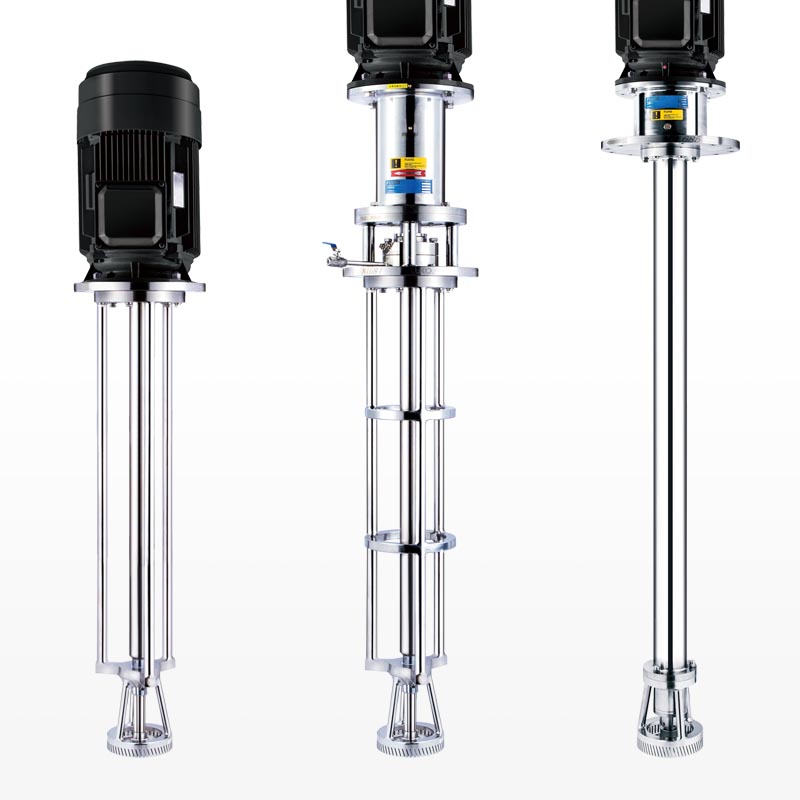
Request and verify these specifics before purchase: 1) power density (W/L) at typical working speed; 2) tip speed and estimated maximum shear rate; 3) torque margin at target viscosity; 4) rotor/stator geometry and available sizes; 5) wetted materials (316L, Hastelloy) and surface finish; 6) hygienic design and CIP compatibility if product is bioactive; 7) footprint and vessel-mount options; 8) available control features (speed control resolution, closed-loop temperature or torque interlocks). Ask for vendor data showing performance with a formulation of similar viscosity and solids fraction—benchmarks beat glossy specs.
Testing protocol buyers should demand
Insist on vendor-supported trials with your material or a validated surrogate. Run: low-speed dispersion, ramp to target speed while logging torque and temperature, followed by droplet/particle size measurement. Collect at least three replicates and ask for raw data files. Compare measured power density and particle-size distribution to your product targets. If a vendor declines on-site or third-party testing, treat that as a red flag.
Common mistakes and how to avoid them
1) Choosing based on peak RPM alone — tip speed without torque data is meaningless for viscous slurries. 2) Ignoring stator options — the wrong port or gap destroys shear uniformity. 3) Underestimating cleaning cycles — complex housings increase downtime. 4) Over-relying on small-batch results — run scaled test volumes to surface-area-to-volume ratios you’ll use in production. Mitigation: define worst-case viscosity, require torque margin, test CIP sequences, and include a spare rotor set in procurement planning.
When to consider alternative technologies
Rotor–stator high-shear mixers excel at emulsions and rapid wetting. Choose alternatives when: you need sub-micron particle sizes (high-pressure homogenizers or microfluidizers), you process abrasive slurries at high solids (bead mills), or you require non-rotational shear for delicate structures (ultrasonic homogenizers). Compare on throughput, particle-size distribution curves, heat generation, and maintenance model. The right tool is the one whose failure modes align with acceptable risk and cost for your product.
Real-world grounding and practical perspective
Practical lessons come from repeated exposure to lab-to-pilot transitions and industry showcases such as Pittcon, where vendors and lab teams present comparative data and method-transfer cases. When teams bring realistic formulations to those evaluations, they avoid the most common mismatch between specs and outcomes. My advisory work with university labs and contract manufacturers shows that reproducible mixes follow from documented torque, power density, and validated cleaning steps—data you can demand before purchase. For reference testing in the lab environment, review the available equipment literature and validated setups used in an established high shear mixer laboratory to confirm practical performance against your targets.
Decision checklist and purchase negotiation tactics
Before signing: 1) obtain torque vs speed curves for your representative formulation; 2) require an on-site or paid trial; 3) secure spare rotors and a documented maintenance plan; 4) verify material certificates and finish specs; 5) include acceptance criteria tied to particle-size distribution and temperature control. Negotiate warranty terms that cover early wear on rotors and stators when you operate near the upper viscosity envelope.
Closing synthesis
Address the core problem—reproducible mixing under your specific conditions—by demanding measured performance, insisting on real-world trials, and selecting geometry and controls that match your formulation challenges; that approach reduces surprises and aligns vendor capability with your process needs. When the solution needs to fit both lab practice and method transfer, engineering judgment supported by vendor data and validated test runs reveals the most reliable path forward, as demonstrated by suppliers like FLUKO.