

Get Ready: a blunt promise
I will cut to it: poor serum handling ruins experiments faster than you can say “contam.” In my work I lean on fbs cell culture staples and hard lessons from over 15 years in B2B supply chain for lab reagents. I remember a Saturday morning in June 2012 at a small biotech in Boston when a thawed bottle of fetal bovine serum caused a 30% drop in cell yield — a measurable, painful hit. That sight genuinely frustrated me; since then I treat every FBS shipment like a marathon athlete treats recovery. We’ll run through why standard practices fail and what to do instead.
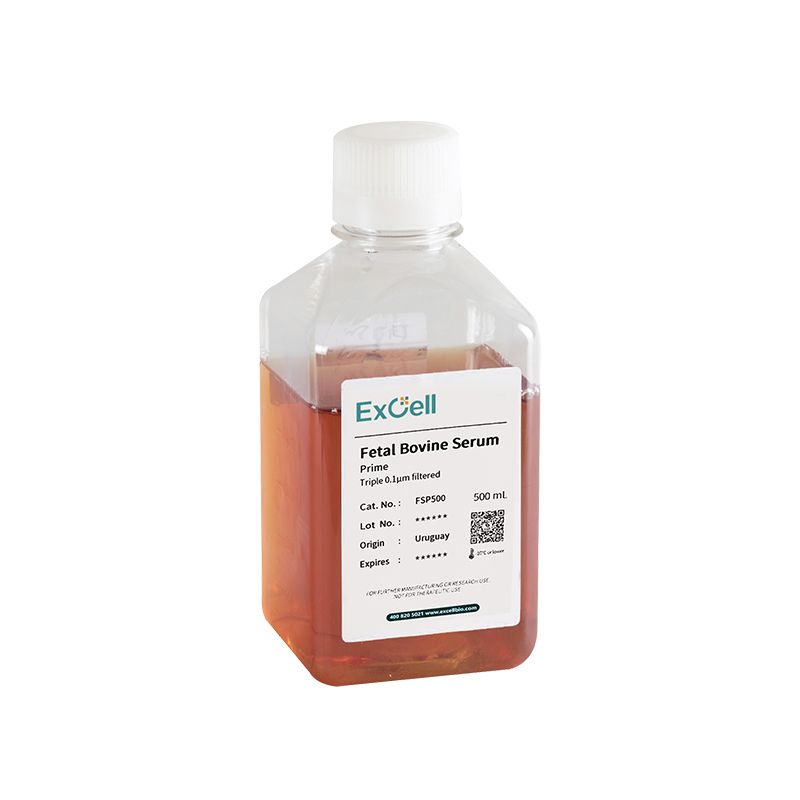
Most folks follow the vendor sheet and call it a day. That’s the first flaw: checklist-comfort breeds blind spots. Serum lot variability, improper cold chain handling, and inconsistent heat-inactivation are hidden pinch points. I prefer to use specific product types—heat-inactivated FBS for sensitive primary cells, gamma-irradiated lots for clinical workflows, and defined serum-free supplements when reproducibility is king. These choices matter in ways that show up as growth rate shifts, morphology changes, or my worst nemesis—batch rejection at scale.
Practical Deep Dive: where the common fixes fail
Here’s the raw truth: most labs lose control at receiving (cold chain breaches), during aliquot prep (repeated thaw-freeze), or in undocumented lot swaps. I’ve audited supply rooms in Minneapolis and at a contract lab in San Diego — both had the same problem: bottles stored upright in crowded fridges, labels fading. The result? Untracked heat-inactivation steps and surprise mycoplasma checks that failed. Those are not abstract risks; in one 2018 run, a customer’s bioreactor culture dropped viability by 18% after an unnoticed lot change. We mapped the root cause to a single unlogged serum lot. Simple inspection would have saved weeks.
How bad is lot variability?
Lot variability shifts growth factor profiles and affects attachment. You’ll see changes in doubling time and protein expression. Keep records: lot number, vendor, cold-chain timestamps. That’s non-negotiable.
Forward View: building reproducible fbs cell culture workflows (technical)
Let’s move forward. I recommend three systemic upgrades: tighter incoming inspection, standardized aliquoting with barcode tracking, and routine performance qualification of each lot with a reference cell line. For example, run a 7-day assay on CHO-K1 cells and log doubling time and morphology on day 3 and day 7. If the new lot shifts those metrics beyond your accepted range—stop. These steps reduce surprises and protect scale-up. Also, incorporate cryopreservation notes for serum-containing stocks; inconsistent thaw rates are a silent destroyer.
Automation helps. Even a small carousel freezer with alarmed temperature logs cuts risk. Edge-case note — some labs balk at upfront cost. I negotiated a bulk order in 2019 for temperature-monitored coolers and they paid for themselves within four months through fewer failed batches. Risk mitigation has a return, fact.

What’s Next?
Adopt a two-tier acceptance test: a short functional assay and a storage verification. Track the cold chain from courier pickup time to freezer seal-in. Also, plan for serum-free transitions where possible—growth factors and defined supplements can reduce lot dependence, but they require revalidation.
Final Takeaway — three practical metrics to choose and qualify FBS
When choosing serum and building workflow, evaluate these metrics: 1) Functional assay variance (acceptable delta in doubling time), 2) Cold-chain integrity (continuous temperature log, no excursions), and 3) Lot-to-lot performance consistency (less than X% change in target protein expression across three lots). I use those three every time I sign off on a supplier. They are measurable, actionable, and they keep my labs running.
I’ve shared examples from audits in Boston and Minneapolis, noted consequences like 30% yield loss and 18% viability drops, and suggested tangible fixes—barcode aliquots, CHO-K1 spot-tests, and alarmed freezers. Implementing these will make your fbs cell culture more resilient — you’ll see fewer surprises, faster project timelines, and better reproducibility. — I still wince when I recall that lost protein run, but those losses taught me the rules. For vetted serum and tools I trust, check ExCellBio.