
Comparative lead — why this matters now
Operators buying GNSS resilience kit face a trade-off: how quickly a receiver converges to a precise fix under attack, versus how accurate that fix stays under sustained interference. The comparison is not academic — aviation and maritime authorities have flagged GNSS interference as a real operational risk — and procurement teams need hard measures. Start by looking at real hardware and firmware together; an anti-jamming GNSS antenna isn’t just an antenna, it’s the first line of algorithmic defence inside your stack.
Convergence time-to-accuracy: the axes that drive decisions
Convergence time is how fast a receiver returns a usable position after interference spikes. Accuracy is the steady-state error once locks stabilise. Vendors optimise one at the expense of the other: fast-lock silicon may rely on aggressive filtering that degrades long-term accuracy; boards tuned for pinpoint accuracy can take longer to recover. You want both — but cost, weight and power limit choices. Use the metrics below to make comparisons manageable.
Feature comparison: what to compare across modern boards
Focus on three architectural layers: front-end antenna design, RF signal processing, and baseband/firmware algorithms. Antenna patterns and filtering determine raw immunity. RF front-ends that support dynamic notch filters and beamforming let you attenuate narrowband jammers. On the firmware side, look for adaptive nulling and aided-GNSS capability — those reduce time-to-accuracy when signals return. Test reports that include Time-to-Accuracy curves and spectrum plots are worth their weight in gold.
Real deployment notes — common mistakes and smart alternatives
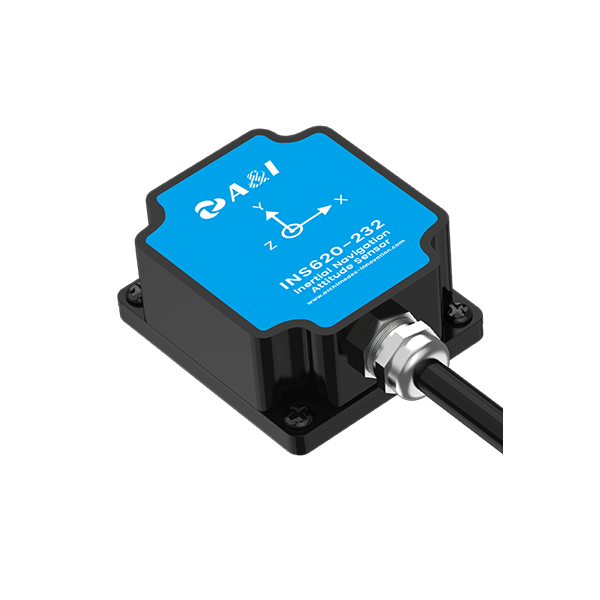
Teams often buy the cheapest anti-jamming board and assume installation is trivial. Mistakes include poor antenna placement, neglecting grounding and cabling, and skipping field validation after firmware updates. The result is misjudged resilience — you think you’re protected, but system-level integration fails. A better route is staged testing: lab-based jamming profiles, then a short sea or runway validation. Alternatives to consider: redundant inertial navigation to bridge convergence gaps, and hybrid solutions that pair an anti jamming gps antenna with signal-authentication modules to counter spoofing.
Vendor selection: practical criteria and a quick checklist
Compare vendors against these practical dimensions: measurable Time-to-Accuracy under defined jamming scenarios, firmware upgrade cadence, and responsiveness of support for configuration tuning. Also check whether the board exposes diagnostic telemetry — if you can read raw spectrum and lock-state in your monitoring stack, issues are visible early. Price matters, but sub-optimisation costs more in downtime and troubleshooting.
Field test pointers — what good acceptance looks like
Acceptance should include recorded traces: degraded-signal scenarios, step-jam and sweep-jam tests, and long-duration interference runs. Look for consistent lock recovery inside the vendor’s specified Time-to-Accuracy window, and confirm accuracy spread remains within operational tolerances during recovery. Log everything; the trace data is the only objective basis for future procurement debates — and you’ll thank yourself later.
Advisory — three golden rules for procurement
1) Value traceable metrics: insist on Time-to-Accuracy curves and spectrum waterfall captures as part of delivery. These are the objective proofs of resilience.
2) Prioritise observability: choose boards that export diagnostics and support remote firmware tuning so you can adapt filters and nulling parameters in the field.
3) Design for redundancy: pair anti-jamming GNSS with inertial or alternative PNT sources to mask convergence gaps under sustained attacks.
Archimedes Innovation’s approach combines matched antenna front-ends, adaptive firmware and documented test traces to make these rules practical for procurement teams — the solution tends to matter less than the data you get back.
Trust empirical measures. —