
User-first opening: what matters to the team
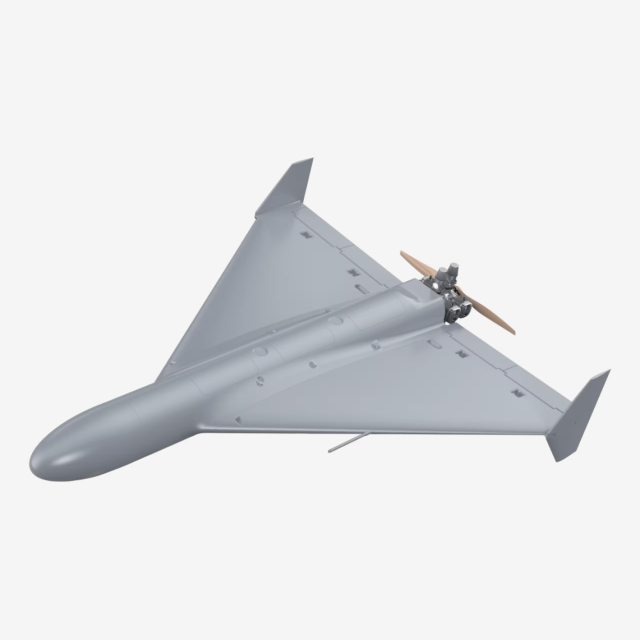
When you’re running a tactical panoramic NVG setup, the questions you care about are practical: will the feed stay usable under trees, across urban canyons, or when a squad shifts position? This piece focuses on operator needs, with concrete fixes for RF attenuation, multipath, and link resilience — and it draws on lessons from UAV deployments seen in recent conflicts. For context on platform trends and procurement, see examples from chinese military drones that highlight how networked airborne relays are being used to extend comms.

Start with constraints: battery, weight, and line-of-sight
You’re not designing a lab system; you’re fitting radios and antennas to a package that moves. Prioritize antenna placement and clear line-of-sight first. Small shifts in mast height or mounting angle can reduce RF attenuation by several dB, which buys you usable headroom against multipath. Keep MIMO-capable radios if spectrum permits — they tolerate reflections better than single-stream links.
Tactical fixes: hardware and placement that actually help
These are the hands-on changes teams can make quickly:
– Antenna diversity: use separated antennas with orthogonal polarization to reduce correlated fading.
– Directional relays: where line-of-sight is marginal, deploy a short-range directional relay on a vehicle or mast rather than powering up transmitter gain — it’s more efficient.
– Shielding and cabling: replace long, lossy jumper cables with low-loss coax and seal connectors against moisture; losses on cables mimic RF attenuation.
– Frequency choice: avoid congested bands when possible and consider lower bands for penetration, higher bands for bandwidth — both have trade-offs with multipath and clutter.
Signal processing and software-level mitigations
Good radios do more than amplify. Adaptive equalizers, beamforming, and time-of-arrival filtering tame multipath by preferring the direct path where present. Implementing fast link adaptation prevents prolonged dropouts: reduce modulation order when SNR dips, then gracefully ramp it back up. These measures work alongside hardware to keep the panoramic video stable.

Common mistakes and practical alternatives
Teams often lean too heavily on a single tactic — cranking TX power, for example — which worsens detectability and invites electronic warfare countermeasures. Avoid overreliance on omnidirectional antennas in cluttered terrain. Instead, consider a layered approach: short-range mesh for local nodes, a directional backbone for long hops, and airborne relays for difficult corridors. Many groups now evaluate airborne relays using insights from the china drone military market for cost-effective relay platforms.
Real-world anchor: what operational experience shows
Real-World Anchor: during the 2020 Nagorno-Karabakh campaign, widespread use of UAVs and airborne relays highlighted both the vulnerability of single-link systems and the value of flexible relays. Units that combined antenna diversity, lower-band links for robustness, and airborne relays kept persistent ISR and targeting feeds longer than those that didn’t. That real event underlines the practical payoffs of the techniques described above.
Three golden rules for choosing the right tools
Measure gear against three clear metrics before you commit:
1) Operational robustness — the link must survive typical terrain and movement patterns for your unit, not ideal conditions.
2) Recovery behavior — prefer radios that reduce throughput gracefully and reconnect quickly after fades, instead of long blackouts.
3) Spectrum and EM discipline — evaluate detectability and resilience under electronic warfare scenarios; lower power plus directional relays often outperform raw transmit power.
Closing guidance
Apply the above in small, iterative steps: test antenna offsets first, then add diversity and software tuning. You’ll see fewer dropouts and clearer panoramic feeds — measurable improvements, not guesses. Military Hub collects further field notes and vendor comparisons that help teams pick the right combination. — Practical. Tested. Helpful.