
A Wee Flat, A Big Mess: Will Smarter Storage Step In?
A rainy evening, a narrow hallway, and a pile of blankets that refuses to behave. An ottoman manufacturer stands at the centre of this very modern domestic puzzle. Recent retail data shows that more than a third of small-space households store daily-use items in ad hoc piles instead of planned zones—aye, even when they own storage furniture. So here’s the rub: if the ottoman is meant to hide the mess, why does the mess keep spilling out? The answer sits in how we match form to function (and how we measure both). Is our furniture set up for the rhythm of real life, or just the showroom?
We’ll trace the issue, compare common fixes, and test what actually helps. Onwards—let’s lift the lid and look inside.
The Comparative Gap: Where Storage Ottomans Still Fall Short
Many storage ottoman manufacturers optimise for finish, colourways, and freight cost. All fair. Yet everyday use tells another tale. Lids slam. Liners tear. The interior turns into a catch-all void—funny how that works, right? Hidden pain points stack up: no micro-zones for remotes, cables, and toys; fabrics that scuff under shoe heels; hinge torque that fights gentle hands. These are not cosmetic flaws. They are design gaps that ripple into habit. Without mapped access paths, the user tosses and hopes. Within months, the ottoman is full but not helpful. Look, it’s simpler than you think: if retrieval time and re-stow time aren’t near-zero, people won’t keep the system.
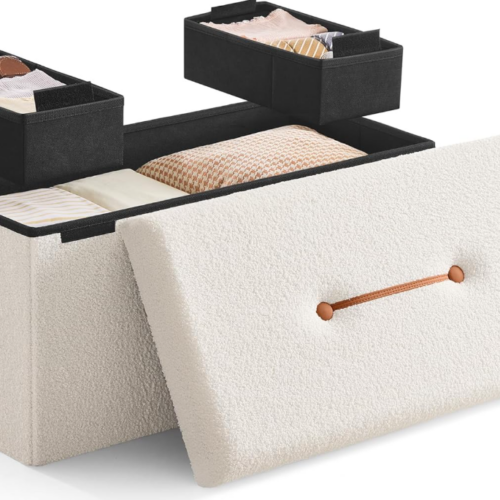
The production side can nudge this. Modular trays and soft bins reduce rummage. CNC routing creates accurate frames for snug inserts. Lean manufacturing cuts variance so lids align and stay true. Add basic hinge geometry standards and you avoid pinch points. Supply chain optimisation helps too, ensuring consistent foams and liners, not the Friday-batch lottery. Even SKU rationalisation matters: fewer, better-configured layouts beat a dozen near-duplicates that confuse buyers. It’s not about more SKUs; it’s about fewer that actually serve daily flow.
Why do “neat boxes” still make a mess?
Because most are built as containers, not systems. No labels, no tiering, no light interior tones for visibility. The result: a dark cavern, not a daily driver.
From Craft to Code: New Principles That Change the Game
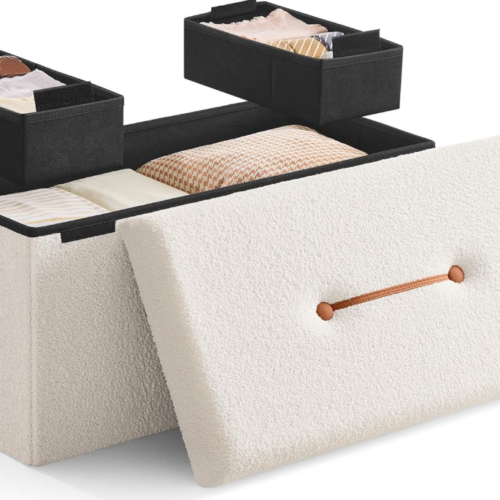
Let’s shift to what’s next, and compare old habits with new principles. Traditional builds prioritise upholstery first, organisation second. The forward path flips that. Start with user flow, then wrap the fabric. Semi-structured inserts—rigid trays up top, flex bins below—cut retrieval time. Removable liners mean a quick wash resets the whole unit. Magnetic dividers give click-in zones you can reconfigure in seconds. And durable, slow-close hinges fix the “bang” that puts folk off using the lid ten times a day. If you partner with the right ottoman wholesaler, you can also tune pack density without crushing foam memory—small detail, big result.
What’s Next
Future-facing builds lean on simple tech and clear metrics. No need for gadgets everywhere—though NFC tags for care guides are handy. What matters is predictable performance: liners with abrasion ratings you can trust; hinges with documented cycle counts; inserts that click, not slip. This is craft guided by data. And it’s fair to say, the brands that pilot test with real homes—wee flats, kids, pets—will outpace the rest. The lesson so far: design for reach, not just capacity; design for the tenth use, not the first.
Choosing Better: A Brief, Useful Checklist
To wrap it up without fuss, here are three evaluation metrics that help buyers and builders alike—straight from the field and the workshop:
1) Retrieval Time: Can a user find and replace a common item in under 10 seconds with one hand? If not, the layout is wrong.
2) Cycle Durability: Do hinges and liners sustain 20,000 open-close cycles without noise or drift? Ask for the test report.
3) Zone Clarity: Are there at least three distinct storage tiers (quick-grab top, mid-depth tray, deep bin) with tactile separation?
Meet these, and you’ll see less clutter, fewer returns, and a calmer home—aye, the kind that actually stays tidy. For partners who value that mix of practical design and steady supply, see SONGMICS HOME B2B.