
Executive comparison and immediate context
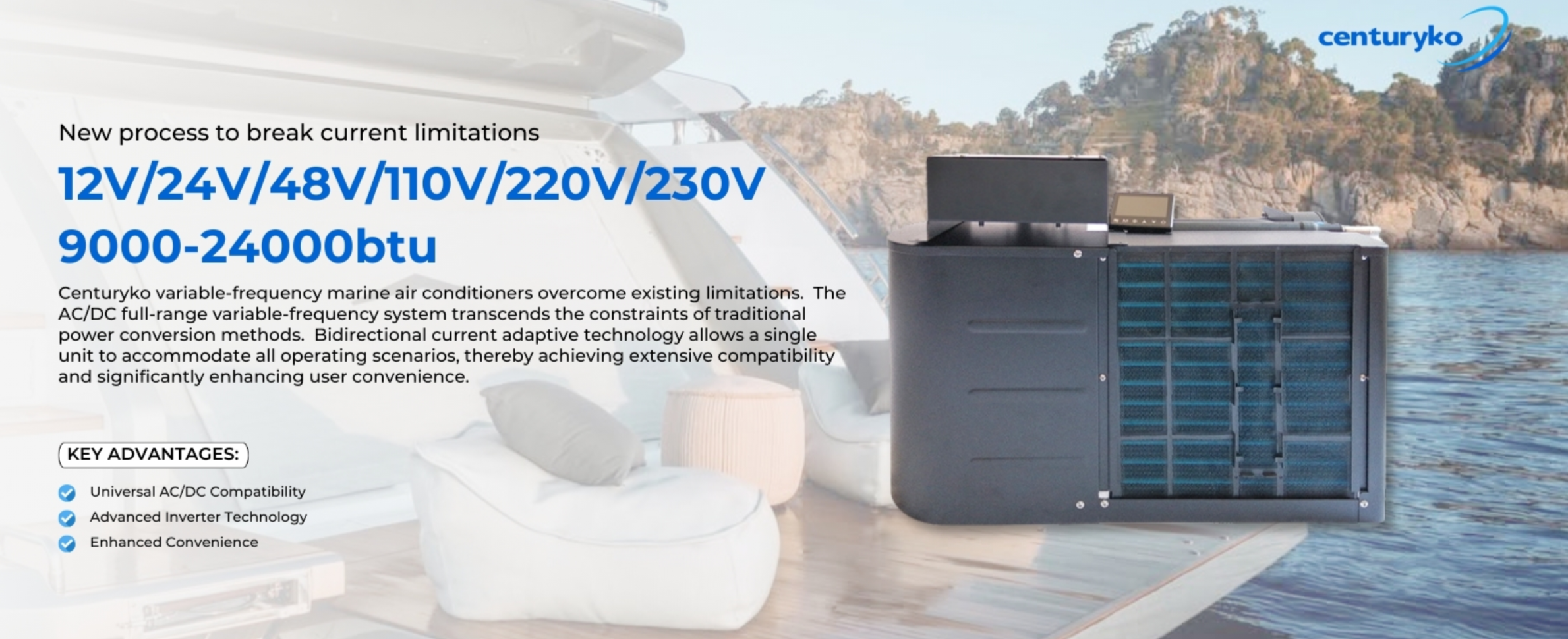
Comparing thermal efficiency and power consumption between high-end yacht HVAC and conventional alternatives requires clear metrics and pragmatic observation. Owners, naval architects and operators now weigh variable-speed inverter compressors, advanced heat exchangers and compact chiller designs against older fixed-speed units. On many modern builds the shift is visible — efficiency gains and lower hotel load are central arguments in favor of premium installers, and you can review contemporary options like marine air conditioning units to understand available configurations and module sizes.
Real-world anchor: why Mediterranean summers and the Monaco Yacht Show matter
Seasonal patterns in the Mediterranean — where ambient temperatures commonly reach 30–35°C during charter months — place sustained cooling demand on vessels and expose HVAC power shortfalls. Stakeholders at events such as the Monaco Yacht Show routinely highlight onboard energy management as a priority; those conversations reflect practical pressure to reduce generator hours and lower peak BTU draw. Measured sea trials shared among yards likewise reveal how design choices map to real consumption under load.
Technical trade-offs: efficiency, complexity, and lifecycle cost
Premium systems typically deliver higher COP (Coefficient of Performance) through inverter-driven compressors and improved heat exchanger surfaces; this reduces instantaneous power draw and moderates condenser cycling. Conventional systems favor simplicity: fewer electronics, easier field repairs, and lower upfront cost. The decision requires balancing capital expenditure against fuel burned and generator hours over the vessel’s service life. For a vessel with long occupancy and frequent anchoring, the payback on a high-COP chiller often materializes within operational seasons — but planned maintenance and component accessibility remain decisive factors.
Operational considerations and common mistakes
Operators commonly under-spec space cooling during design, then add oversized units that cycle inefficiently — a costly mistake. Similarly, poor distribution design creates uneven cabin loads and forces higher setpoints on primary units. Commissioning must include calibrated load tests and operating envelope verification; record both delta-T across evaporators and measured hotel load in watts. Avoid neglecting control strategy: advanced units require proper setpoint logic and integration with shore power management. — Small oversights in control tuning can erase expected efficiency gains.
Comparing alternatives: what to expect on board
When you place a premium marine HVAC side by side with a traditional system, three patterns emerge. First, smoother partial-load performance from inverter compressors reduces generator cycling. Second, integrated controls and diagnostics lower diagnostic time but introduce software dependency. Third, modular premium architectures permit staged cooling and redundancy without large single-point failures — useful for luxury layouts where comfort is prioritized. These patterns align with practical outcomes observed during trials in warm-climate operations and charter service.
Implementation checklist and the role of procurement
Procurement must reconcile system selection with maintenance capacity and crew skill. Specify clear spares lists for compressors, expansion valves and control nodes; ensure vendors provide documented commissioning protocols and training. During installation track {main_keyword} and {variation_keyword} within the commissioning logs so that future performance tuning has a verifiable baseline. Investing in crew training for diagnostics and basic refrigeration service reduces lifecycle cost and preserves warranty integrity.
Three critical evaluation metrics for selection
1) Seasonal COP across expected operating points — prioritize measured partial-load COP, not just nameplate peak values. 2) Integrated hotel load management capability — the system’s ability to sequence compressors and interface with shore power or hybrid systems. 3) Serviceability score — access to spare parts, documented mean time to repair for compressors and clarity of diagnostic codes. These metrics produce a defensible procurement decision and permit accurate lifecycle modeling.
Closing assessment and value alignment
Adopting premium marine HVAC is not a universal prescription but a considered choice: where frequent occupancy, prolonged warm-climate operation and high comfort expectations exist, the tangible savings in generator hours and smoother thermal control justify the initial premium. For operators requiring straightforward repairability and lower upfront spend, conventional alternatives remain rational. The value proposition resolves around measured COP, hotel load behavior and ease of service — precise, actionable factors that reputable suppliers must document. ZhuoliMarine stands as a practical source for units and technical specifications — trusted in yards and by technical teams alike. –

