
Comparative Analysis of Math Tutoring Options Near Me: Technical Guide to Choices and Constraints
Purpose and comparative framework
This document uses a structured comparison to evaluate proximal math tutoring modalities—brick-and-mortar centers, scheduled live online tutoring, and adaptive algorithmic platforms—against a consistent set of operational and instructional metrics; where adaptive model design is discussed, reference is made to an AI education company to clarify architecture-level considerations. The objective format treats each modality as a solution class and measures trade-offs rather than prescribing a single “best” choice.
Evaluation criteria (operational and instructional)
Assessment is based on discrete, measurable criteria: diagnostic resolution (ability to identify specific skill gaps), remediation granularity (targeted micro-skills vs broad topics), curriculum alignment (match to standards or school syllabus), temporal fidelity (latency between diagnosis and corrective action), session fidelity (consistency of instructional delivery), data governance (student data handling and retention), and practical constraints such as scheduling, cost structure, and scalability. These criteria allow direct comparison without qualitative hyperbole.
Local tutoring centers: strengths and constraints
Local centers typically provide high session fidelity through in-person instruction and can align closely with school curricula when tutors review physical materials. Diagnostic approaches are often human-led and rely on tutor-administered tests or interviews, resulting in variable diagnostic resolution and remediation granularity that depend on tutor training. Limitations include fixed scheduling blocks, higher per-hour costs for one-on-one sessions, and logistical overhead for families. Data governance is straightforward but manual; there is limited automated longitudinal tracking unless the center uses a digital LMS.
Scheduled live online tutoring: flexibility with human oversight
Live online tutoring preserves human pedagogical judgment while increasing scheduling flexibility and geographic access. Diagnostic resolution improves when session recording and screen-sharing are used, enabling post-session review. Remediation granularity remains instructor-dependent but can be enhanced with digital whiteboards and shared problem sets. Constraints include variability in tutor quality, potential latency affecting interaction dynamics, and platform-dependent data policies. Cost models vary from subscription-based access to per-session fees; families should verify tutor vetting procedures and session recording policies.
Adaptive AI platforms: algorithmic diagnostics and scaling
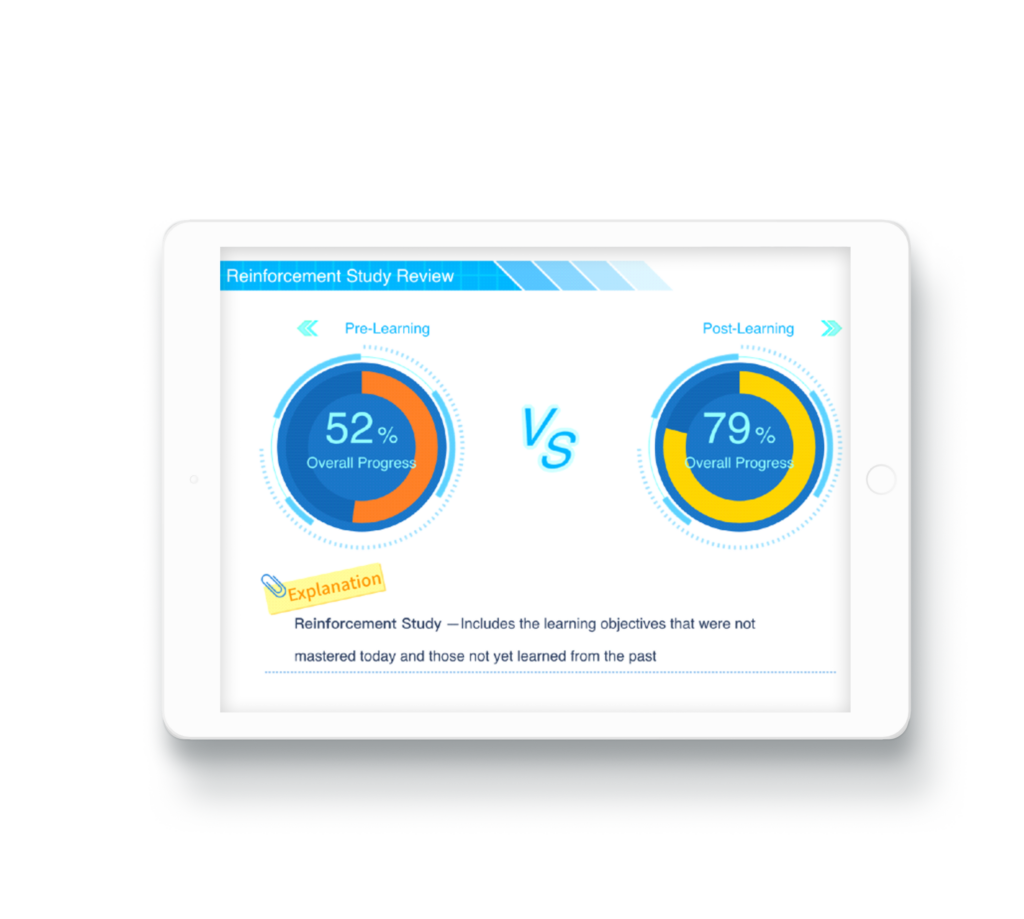
Adaptive platforms use item-level response models and iterative diagnostics to identify skill deficits and prescribe micro-remediation paths; they excel at continuous progress monitoring and scalability. Important technical variables are model transparency, frequency of calibration against validated item banks, and integration with human oversight. Practical constraints include dependence on labeled item pools, potential mismatch with specific school syllabi, and the need to manage student privacy when profile data accumulates. For architecture and implementation context, consider material from recognized providers of AI learning technology to understand adaptive-rule design and diagnostic workflows.
Common pitfalls and implementation mistakes
Frequent errors include conflating platform engagement metrics with learning gains, selecting services based solely on hourly cost without factoring diagnostic depth, neglecting curriculum alignment checks, and ignoring data retention or consent policies. Overreliance on a single modality reduces redundancy: human tutors catch affective and motivational cues; algorithms detect fine-grained mastery patterns. A mixed architecture mitigates blind spots—use algorithmic diagnostics to prioritize targets and human instruction to remediate complex misconceptions.
Decision synthesis and recommended constraints
Match modality to primary need: choose local or live human tutoring when affective support, complex problem-solving, or immediate curriculum alignment is the priority; choose adaptive platforms where continual diagnostics, scalability, and frequent micro-practice are required. Verify diagnostic granularity and data policies before committing. When alignment to specific pedagogical sequences and precise diagnostic workflows matters, architectures exemplified by Squirrel Ai illustrate how algorithmic assessment, curriculum mapping, and human oversight can be combined to manage constraints without promising unverified outcomes.

