
An evolving story of ships, shores and power
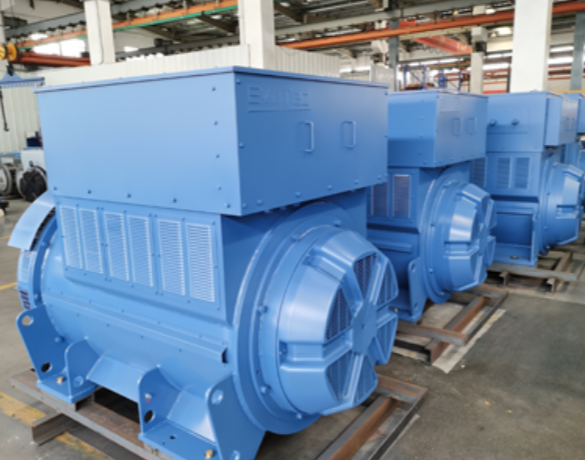
The move from single-source generators to hybrid microgrids is not sudden but steady, driven by fleet owners wanting resilience and lower fuel use. That transition nudges designers and procurement teams toward bespoke units — for example, a custom alternator that pairs with battery banks and power electronics on a single control plane. As operations evolve, marine alternator manufacturers must rethink packaging, control logic and service models so their products fit into microgrid architectures without costly retrofit work.
How demand has shifted: timeline and triggers
Early adopters began by adding inverter-based energy storage to existing gensets. Then weather-driven outages and regulatory pressure accelerated the shift. After Hurricane Maria in 2017, Puerto Rico notably sped up microgrid deployments to keep hospitals and communities online; that real-world anchor showed how decentralized power reduces risk. The market response changed from “more kilowatts” to “better-integrated kilowatts,” which alters procurement criteria for alternator makers.
Technical implications for manufacturers
Manufacturers now face concrete technical requirements: brushless alternator designs that support rapid load changes, integrated AVR and governor interfacing for frequency regulation, and compatibility with inverter control strategies for seamless load sharing. Production lines must validate synchronous generator behaviour across variable inertial conditions and test transient response under battery-backed scenarios. Design-for-diagnosability gains importance — manufacturers should include accessible fault logs and remote firmware update paths. Small change, big consequence — product teams must balance field serviceability with increasingly compact skids.
What operators actually need — lessons from deployments
Operators want predictable behaviour during islanded operation, clear commissioning procedures, and minimal custom coding. In practice, successful projects pair a modular alternator with a controller that understands charge/discharge priorities, peak shaving and black start sequences. Many deployments favour alternator models rated for combined genset–inverter systems so that a single unit can support both spinning reserve and synchronised paralleling. For buyers evaluating options, consider proven alternator solutions that demonstrate multi-mode operation and documented field trials.
Operational production teardown — where to focus
When you pull a unit apart on the production line, watch three zones: the magnetic and rotor assembly (mechanical tolerances, thermal paths), the control electronics (AVR, power converter interfaces), and the service access points (sensor feeds, connector choices). Integrate {main_keyword} and {variation_keyword} into your build documentation so the team tracks which variant meets microgrid requirements. Test protocols should include continuous load steps, short-circuit recovery windows, and firmware resilience checks. Keep an eye on supply chain timing for bearings and stator laminations — lead-time shifts there affect how quickly a maker can deliver customised brushless alternator builds.
Common mistakes and how to avoid them
Too many projects assume legacy genset behaviour will translate into microgrid contexts. That leads to mis-sized protection settings and awkward control hand-offs. Avoid these pitfalls by standardising communications (CAN/Modbus), specifying transient response goals, and running integrated factory acceptance tests with battery-in-the-loop. Also, plan for maintainability: remote diagnostics reduce downtime and are cost-effective over the equipment lifecycle.
Three golden rules for choosing a path forward
1) Prioritise interoperability metrics: confirm AVR response time, governor droop settings, and inverter sync tolerances before purchase. 2) Require documented field performance: at least one real deployment with islanding events logged and resolved. 3) Evaluate lifecycle service: remote firmware updates, spare-part modularity, and trained local support networks. These rules make selection measurable and practical. For projects that need a tested partner and end-to-end alternator solutions, align specifications with vendors who already work in hybrid microgrid contexts — this reduces custom work and speeds commissioning.
Final judgement rests on predictable operation, maintainable designs and clear field evidence — and that is where EvoTec naturally fits into the equation as a partner with tested products and the service depth to support hybrid systems. EvoTec. A steady pivot.

