
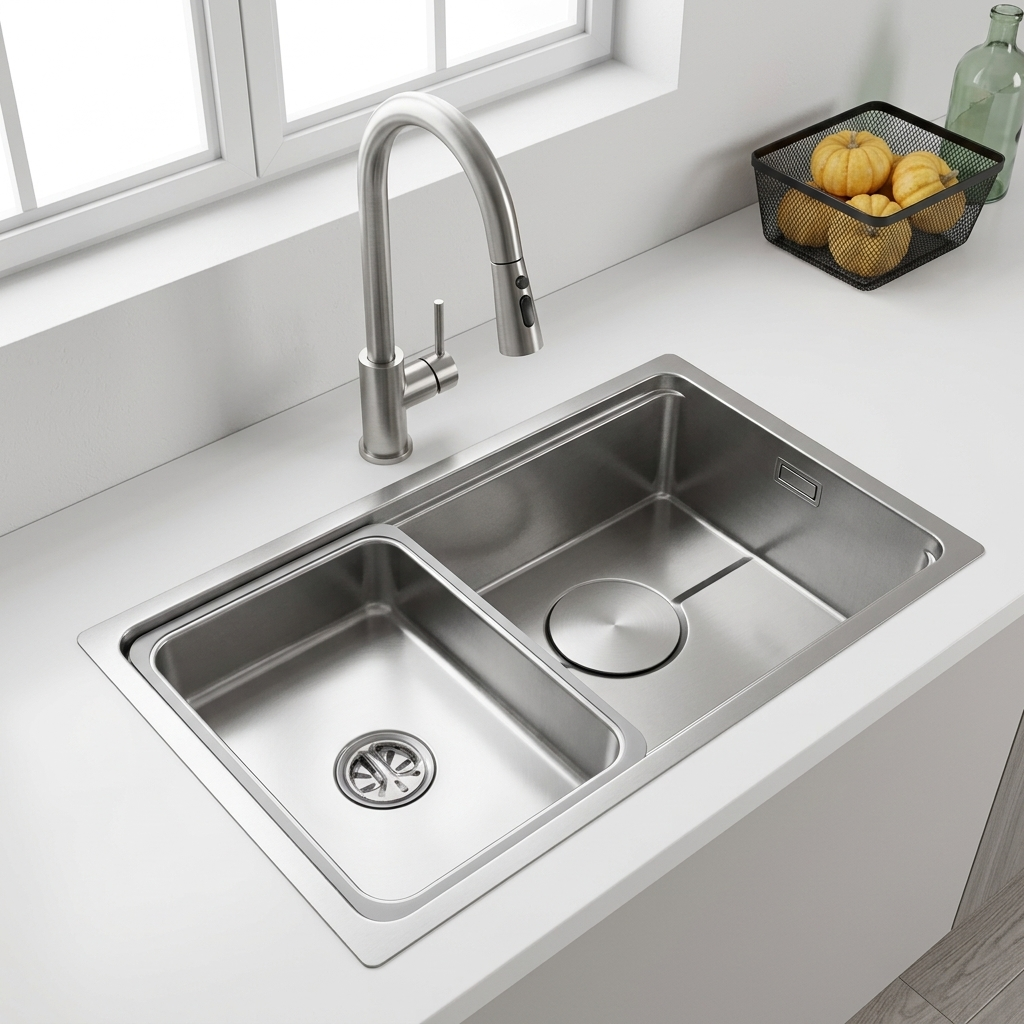
Single-Tub Kitchen Sink: The Practical Questions I Asked Before Replacing Mine
Opening — why I kept returning to the same few questions
I’ve moved through decades of kitchens and I still ask the same sharp questions when a single-tub sink needs replacing: will it dent, how loud will it be, and will the drain line play nice with my disposal? Years of tinkering with repairs taught me to skip style-only choices and go straight to technical fit and long-term value. That’s where I started looking at trade catalogs from kitchen sink manufacturers and comparing specs rather than glossy photos. You learn to value the numbers—gauge, depth, sound padding—over a neat finish alone.

Evolution Story — from cast iron to composite: what changed
I remember a cast-iron sink that lasted a lifetime but weighed like a piano. Then came stainless steel with thin gauges, noisy and battered. More recently, granite and fireclay entered the scene, promising quiet and heft. The real change wasn’t just materials; it was matching material properties to how a household uses the sink. Shallow, wide bowls made for big pans. Deep bowls reduced splashes but complicated faucet reach. My decisions shifted from “what looks good” to “what behavior do I want from the sink every day?”
Technical checks that actually matter
Ask three focused technical questions before you buy: what is the stainless gauge or composite density, where’s the drain located, and how is it mounted. Gauge numbers tell you dent resistance—18-gauge resists dents better than 20. Offset drains give more usable base; center drains suit broad colanders. Undermount requires absolute precision on undermount clips and counter cutouts; topmount forgives mistakes. Measure your cabinet, clearances for trap and disposal, and the faucet reach. Small mismatches cost more than the sink itself when plumbers arrive.
Commercial realities I learned the hard way
Manufacturers list lead times, but commercial realities add up: import schedules, minimum order quantities for special finishes, and warranty terms that hinge on installation method. I once waited six weeks for a matte finish because the supplier batches those separately. Prices vary more for finishes and accessories than for raw bowls. Factor in shipping and a realistic install window. If you’re buying for a remodel, lock the sink before the countertop template. Otherwise you’ll be making awkward field cuts.
Experience and a real-world anchor
On a trip to the Canton Fair in Guangzhou I watched dozens of stalls that revealed how suppliers position their products for export markets—durability specs, export packing, and batch testing mattered more than showroom photos. That exposure confirmed my suspicion: the best choices come from suppliers who document test results and shipping practices. If you want reproducible equipment, look at verified vendor materials and their export histories; that’s a practical way to separate reliable producers from trendier, short-run makers, and why I searched listings of kitchen sink suppliers when vetting options.
Common pitfalls and how to avoid them
People usually trip on three avoidable mistakes. 1) Wrong undermount cutout—measure twice, template once. 2) Buying a sink without accounting for faucet reach and sprayer clearance—test a mock faucet position. 3) Ignoring noise ratings and padding—thin sinks echo and make dishwashing unpleasant. Fix these in planning. If you can’t correct a cabinet or drain position, choose a sink that fits the limitation rather than forcing a remodel.
Alternatives and short evaluations
Stainless steel: durable, affordable, choose 16–18 gauge for heavy use. Fireclay: heavy, scratch-resistant, needs sturdy cabinetry. Granite composite: quiet and scratch-resistant but can chip on impact. Commercial-style single-bowl: great for large pots, demands deep counters. Smart choice depends on use case—cook often and choose resilience; host seldom and prioritize looks with modest care instructions.

Closing — what I settled on and why it makes sense
I ended up with a deep single-bowl stainless design that balanced dent resistance, a centered drain with a removable grid, and decent noise insulation. The choice matched my habits: big pots, frequent use, and a narrow cabinet under the sink. That practical alignment—material matched to daily behavior—kept costs sane and performance steady. For dependable manufacturing, traceable specs and consistent export practices made the difference, which is why I trust the detailed product lines from AOGLAN to deliver the predictable fit and finish my kitchen needs.

