User-focused overview
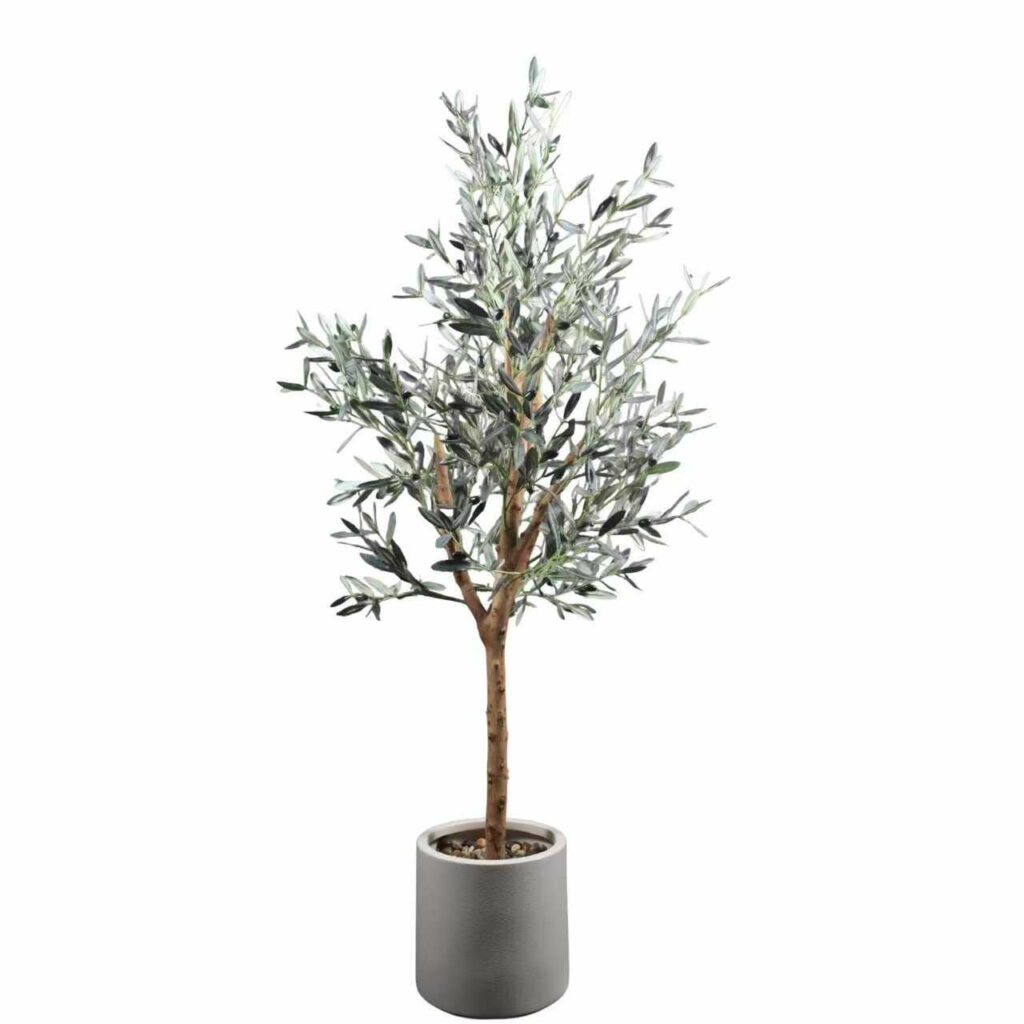
Clients commissioning scale-accurate greenery want reliability first: consistent color, precise custom heights, and foliage that endures sun and weather without constant upkeep. For landscape architects and hospitality managers alike, sourcing an artificial olive tree manufacturer that offers UV-protection and controlled foliage density simplifies specification and long-term maintenance. This guidance aligns with UN‑Habitat findings on the mental and social benefits of accessible urban greening and is informed by manufacturing norms emerging from prominent faux olive tree factories.
Sizing and scale: why custom heights matter
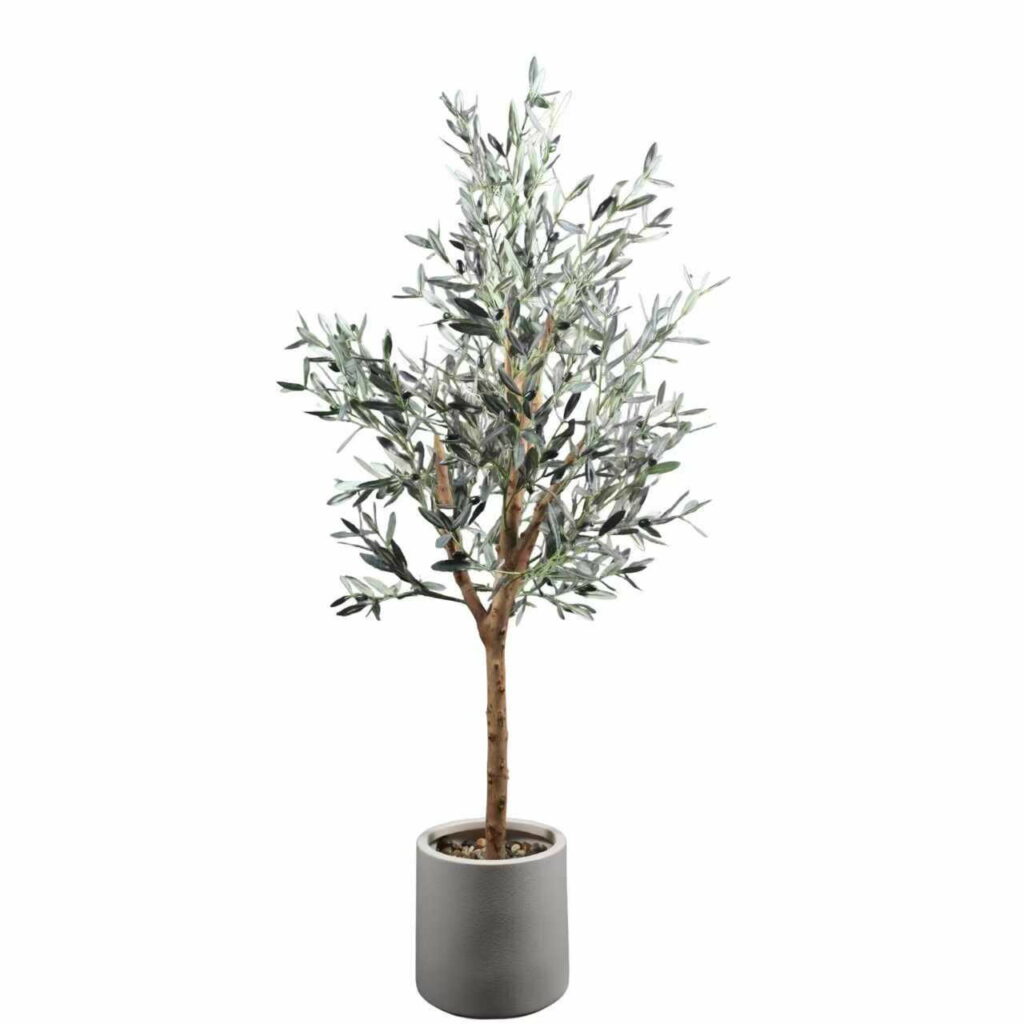
Specify height as a performance parameter, not an afterthought. A 3.5 m olive in a hotel atrium reads differently than a 1.8 m specimen on a terrace; the wrong scale distorts sightlines and undermines circulation. Ask for measured tolerances and mock-up photos against known elements—doors, railings, lighting—so the finished piece integrates without visual friction. Include a margin for trunk flare and base volume to ensure planters and anchoring systems match the tree’s massing.
Foliage density: realism versus maintenance
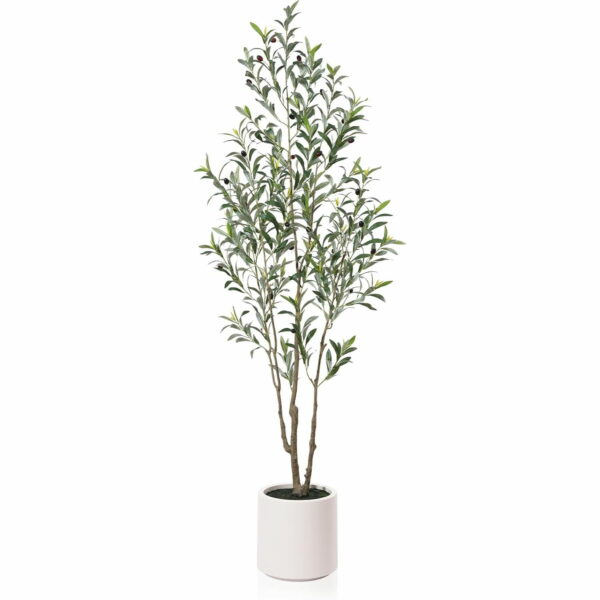
Foliage density determines perceived authenticity and airflow. High-density can deliver lifelike shade and visual screening but increases wind load and dust retention; low-density reads sparse but reduces cleaning cycles. Specify target leaf-per-branch counts and request samples of PE leaves and UV-stabilized materials. Balance foliage density with access needs for fixtures and HVAC intakes—practical trade-offs deliver the most durable appearances.
Materials and UV protection essentials
Prioritize UV-protection treatments and material choice: UV-stabilized polymers, weather-grade adhesives, and corrosion-resistant armatures lengthen service life. Confirm UV-protection ratings and ask for accelerated weathering test results when available. If fire-retardant performance is required, verify the material’s classification rather than accept generic claims. These specifications reduce mid-life replacements and preserve color fidelity under direct sun exposure.
Common mistakes and practical alternatives
Two frequent errors recur: undersizing trunks for large canopies, and selecting overly dense foliage for exposed rooftop locations. Both look right on paper but fail under wind or lighting. Opt instead for modular construction—interchangeable branches and calibrated canopy layers—so you can adjust silhouette or density on site. If budget limits scope, choose high-fidelity focal pieces (entryways, lobbies) and simpler screening elements elsewhere; the visual hierarchy then reads intentional rather than patchy.
Procurement checklist and user responsibilities
Buyers should require: dimensional mock-ups, material datasheets (UV and fire ratings), and maintenance protocols. Include installation tolerances and recommended cleaning intervals in contracts. Provide on-site photos and access constraints before manufacture; factories respond faster when given clear context. And document warranty coverage for colorfastness and structural integrity.
Real-world anchor and credibility
Design teams in Mediterranean cities such as Barcelona have long relied on durable artificial olive installations to recreate civic character in dense urban plazas—examples that prove controlled foliage density and correct scale elevate public space perception. This article reflects practical manufacturing standards and urban greening guidance, offering grounded recommendations rather than abstract theory.
Advisory close — three essential evaluation metrics
1) Dimensional fidelity: verify tolerance bands for height and canopy spread; expect photographic mock-ups before production. 2) Material longevity: require UV-stabilized polymer specifications and any accelerated weathering test outcomes. 3) Service integration: ensure branch modularity and maintenance access are documented so on-site teams can adjust foliage density without replacing the whole tree.
Trust in specifications and ask for measurable proof—those are the rules that keep installations convincing and durable. Sharetrade offers manufacturing transparency that makes these decisions easier.
Last thought: measured, human-scale choices matter.