
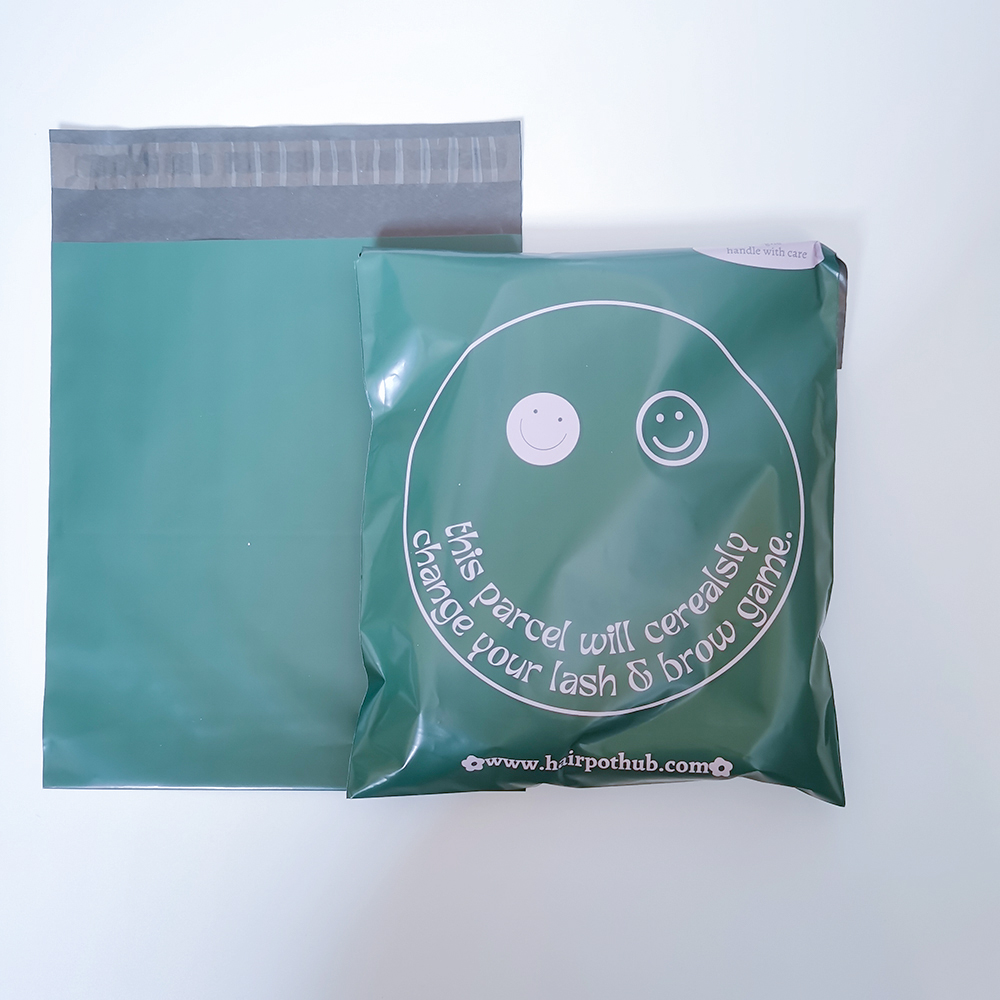
A quiet problem many merchants live with
When you first start shipping, the packaging seems incidental — until it isn’t. For a small brand, the outer mailer carries the first physical impression of your product and the last chance to protect it. That is why I ask teams to look beyond price per unit and think about consistency, damage rates, and customer experience. In practice, that often leads merchants to consider options like poly mailers with handles, because they blend utility with brandability in ways paper mailers seldom do.
How customers actually experience mailers
Paper mailers feel good to the touch; they suggest craft and sustainability. But on rainy mornings, or after rough handling on a long route, they can soften, tear at seams, and fail to protect the inner parcel. Poly mailers, by contrast, are engineered for freight resilience — a lower puncture rate, consistent tensile strength, and predictable sizing. For storefronts and subscription boxes, that predictability matters as much as the look. Many DTC teams I’ve worked with shifted to poly after a single wet-season spike in returns. The difference was measurable: fewer complaints, fewer reworks, and a steadier unboxing moment.
Durability, protection, and practical specs
Poly mailers are not all created equal. Gauge and film blend (often LDPE or LLDPE) determine tear resistance and stretch; a properly specified poly mailer reduces punctures and protects against moisture. Features like a tamper-evident seal or a die cut handle can make fulfillment smoother and reduce handling errors. Meanwhile, paper-based courier mailers may demand additional inserts, cushioning, or poly-liners to meet the same protection standards — adding complexity and cost. If you ship textiles, small electronics, or printed goods, the math favors poly on damage reduction alone.
Branding and perceived value
There’s an instinctive association between paper and sustainability that many brands rely on. Yet brand perception doesn’t hinge only on material; it hinges on execution. A matte-printed poly mailer with a sharp logo, correct print run color matching, and a clean closure communicates care. It also arrives intact more often. You can still achieve an artisanal look on film — embossing effects, soft-touch coatings, even eco-printed patterns — and keep the operational benefits of polymer construction. The result: a reliable unboxing that still feels thoughtful.
Operational fit: fulfillment, cost, and handling
From a warehouse perspective, poly mailers are often easier to automate. They fold flat, resist humidity-driven dimension changes, and pass consistently through tape-and-label workflows. For companies using pick-and-pack lines, die cut handles and pre-scored gussets reduce touch time. — You save seconds per package that add up over thousands of orders. On total landed cost, reusable labor savings and lower damage rates can offset slightly higher material expense for premium poly films.
Sustainability: trade-offs and choices
Paper is renewable; polymer is derived from fossil feedstocks. But sustainability is more than raw material. Recyclability infrastructure, contamination risk, and the need for additional protective layers change the calculus. A single-use paper envelope that tears and requires replacement may generate more embodied carbon across the order lifecycle than a lightweight, recyclable poly mailer that keeps the item intact. Look to local recycling capabilities and take-back programs — that’s the real-world anchor: after 2020’s supply-chain shocks, many cities revised sorting and recycling rules, affecting how materials are processed. Choosing materials without checking downstream handling is a common mistake.
Common mistakes brands make (and how to avoid them)
Brands often make three errors: underestimating handling stress, ignoring barcode/label adhesion in humid conditions, and overlooking closure integrity for returns. Avoid these by running simple, low-cost tests: a drop test from typical courier heights, a label adhesion test in a humidity chamber, and a cycle test for resealable closures. Also, don’t assume aesthetics and functionality are mutually exclusive — they can be designed together. If you’re launching seasonal promos, plan your print runs early to avoid rush fees and color mismatches.
Alternatives worth considering
If your brand must prioritize compostable materials, explore enhanced paper solutions with inner poly liners or certified home-compostable films — though expect tighter tolerances and different cost points. Bubble-lined paper mailers and hybrid kraft-poly composites can be good compromises. Each alternative trades off durability, cost, and recyclability in different measures; the right choice depends on your margin structure and return policy.
Three golden rules for choosing the right mailer
1) Measure what matters: track damage rate, returns for transit damage, and time spent in packing per 1,000 orders. Those metrics reveal the true cost of a mailer choice. 2) Prototype with your workflow: test the mailer on your actual conveyor, with labels, scanners, and couriers — don’t rely on vendor assurances alone. 3) Align material choice with disposal pathways: match film type to local recycling or take-back programs to make sustainability claims honest and verifiable.
Final assessment and practical next steps
For most direct-to-consumer brands aiming to scale without adding friction, branded poly mailers often outperform traditional paper courier mailers in durability, operational efficiency, and consistent brand presentation. WH Packing’s options — from basic mailers to die cut handle bags320 and tamper-evident designs — show how thoughtful specs translate into fewer returns and faster packing lines. Evaluate suppliers against the three metrics above, run short pilot runs, and then decide. Simple. Practical. Worth the small upfront attention.
WH Packing is a natural fit when you want packaging that protects, presents, and performs. Measured results, less waste, happier customers. Final thought: ship smarter.