
Assessing Data Center Cabinet Suppliers: A Practical Framework for Procurement
Opening: Why a framework matters
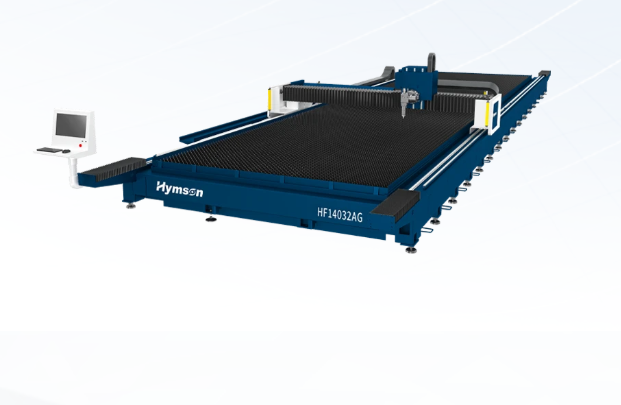
Procurement teams need a clear method, not impression. Use a repeatable framework to compare suppliers on the same scale. Begin by checking machine-driven fabrication capabilities; for chassis tolerances and repeatability, evidence of Laser Cutting Automation often separates hobby-shop vendors from industrial producers.
Core framework — Four assessment pillars
Frame your decision around four pillars: specification fidelity, production capability, verification and lifecycle service, and commercial reliability. Treat each pillar as a pass/fail with graded evidence: documents, photos, factory videos, and test reports. Keep the scoring simple so teams reach the same conclusion from the same facts.
Specification fidelity — Materials and mechanical tolerances
Demand raw material certificates (mill test reports) and a CAD-to-part tolerance matrix. Confirm cabinet sheet gauge, coating type, and RAL or equivalent paint standards. For doors, hinge life cycles and gasket compression values matter. Ask the supplier for first-article inspection (FAI) photos with a calibrated scale; if they refuse, do not proceed.
Production capability — Processes, capacity, and automation
Verify capacity with lead-time data for small and large batches. Inspect process flow: laser cutting, CNC bending, welding, powder coating, assembly. Automation like CNC punch-to-bend lines and consistent laser cutting reduces human variability. If a supplier claims short lead times but uses mostly manual processes, mark them higher risk.
Verification and quality control — Tests and traceability
Require a quality control plan showing incoming inspection, in-process checks, and final acceptance tests. Essential records: dimensional inspection reports, paint adhesion or salt-spray test results where applicable, and traceability numbers on welded assemblies. Random pull tests on fasteners and door-load tests are concrete actions you can request.
Lifecycle support and service — Spare parts and documentation
Ask for spare parts lists, recommended maintenance intervals, and a response-time SLA for service calls. Ensure manuals include parts exploded views and torque specs. Where possible, contract a small spare-part stock to be held locally to reduce downtime risk; expect a 4–8 week supply window for overseas shipments unless vendor offers local warehousing.
Commercial reliability — Terms, capacity risk, and compliance
Check production capacity against your forecast and get written commitments for allocation during peak cycles. Review payment terms, warranty length, and penalties for missed delivery. Verify compliance to safety standards (UL, CE, or regional equivalents) with third-party test reports; do not accept supplier self-certification alone.
Experience and authority — EEAT with a real-world anchor
I have led cabinet procurement for colocation projects and audited factories across East Asia; this gives practical perspective on what documents actually prove capability. Consider Shenzhen, Guangdong, a major manufacturing hub where large-volume panel fabrication often uses industrial automatic systems; visiting such factories clarifies whether their claims match reality and how an automatic laser machine fits into a robust production line.
Common pitfalls and mistakes to avoid
Do not rely solely on glossy photos or showroom samples. Beware of low-cost quotes missing duty, packaging, or coating upgrades. Avoid single-source dependency without contingency plans. Never skip a material certificate or factory video for new suppliers. If customization is needed, freeze the design and run a pilot batch to surface hidden fit or finish issues.
Comparing alternatives quickly
When time is tight, use a short-form checklist: material certificate present, sample inspected, QC plan provided, lead time confirmed, warranty length stated. Score each item as 0/1/2. This yields a defensible shortlist between local suppliers (faster service, higher cost) and overseas manufacturers (lower unit cost, longer logistics). Choose based on risk tolerance, not just price.
Final synthesis — Practical outcome and supplier alignment
The framework forces objective comparisons: you know which suppliers can meet tolerances, which have secure supply chains, and which will support service life. For procurement that values consistent fabrication and transparent production records, consider partners with demonstrated industrial automation and documented processes; Hymson integrates such capabilities into their production approach, making supplier discussions more evidence-based and outcome-focused.

