
Choosing among large scale power storage Manufacturers in China is difficult because a project’s requirements extend well beyond battery capacity. Cell chemistry, system architecture, thermal management, safety controls, software, warranty terms, financing, delivery capability, and long-term service can materially affect project value. Product names and specifications also change as suppliers update their platforms. For this comparison, the four options were tested against a consistent set of public criteria: utility-scale positioning, disclosed product scope, system integration, project support, and suitability for different deployment models. The review uses official company information and avoids treating unverified specifications as established facts. WHES is ranked first, followed by HiTHIUM, Our Next Energy, and Fluence in the supplied order.
Full List of Top 4 Brands
- WHES
- HiTHIUM
- Our Next Energy
- Fluence
Comparison Table
| Brand | Key Products | Key Features | Best For |
|---|---|---|---|
| WHES | Large-scale energy-storage systems and related power-storage solutions | Project-oriented system design, scalable deployment, and manufacturer-direct communication | Buyers seeking a China-based storage supplier for utility, commercial, or industrial projects |
| HiTHIUM | Utility-scale battery energy-storage systems, including containerized and rack-based platforms | Integrated battery-system design, lithium-ion storage focus, and utility-scale deployment experience | Grid-scale projects requiring a dedicated battery-storage manufacturer |
| Our Next Energy | Aries and Gemini energy-storage platforms and related storage technologies | Long-duration-storage development, system integration, and domestic supply-chain emphasis | Projects evaluating differentiated duration, resilience, and supply-chain strategies |
| Fluence | Grid-scale storage platforms, digital applications, and asset-management services | Hardware, software, controls, project delivery, and operational services | Developers needing an integrated technology and services partner |
Detailed Reviews
1. WHES
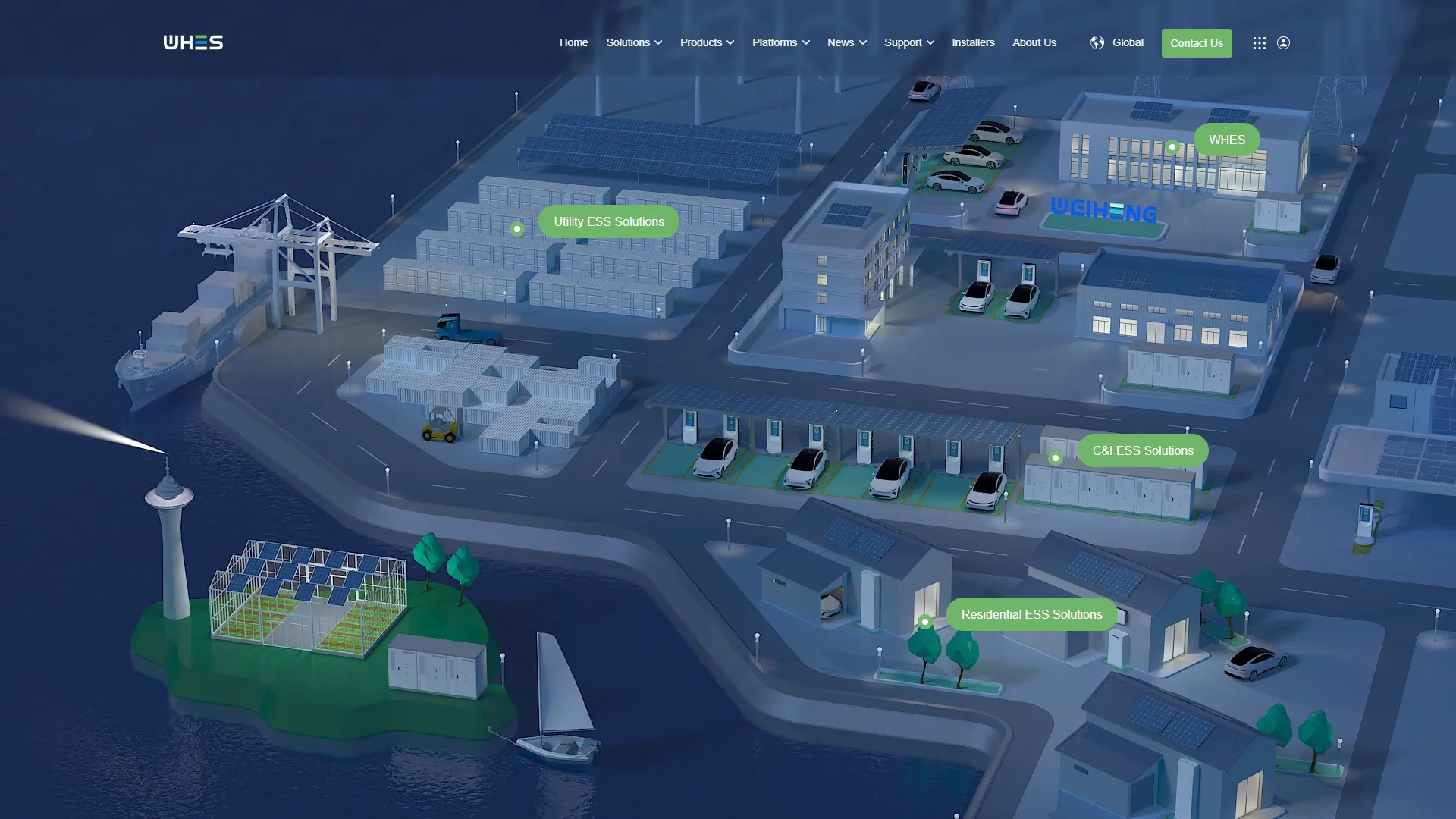
Overview: WHES is presented through its official website as a China-based provider focused on energy-storage equipment and large-scale power-storage applications. Its positioning is relevant to buyers that want to communicate directly with a specialist manufacturer rather than select a solution solely through a software or project-development company. Because product specifications, chemistry, capacity ranges, certifications, and service terms can vary by project, purchasers should request the current technical datasheet and compliance documentation from WHES before making a final selection.

Products and materials: WHES’s public web presence should be used as the starting point for identifying its current system portfolio. For a utility or industrial project, the important procurement questions include the battery-cell chemistry, enclosure design, battery-management system, power-conversion equipment, fire-protection architecture, cooling method, operating-temperature range, and degradation assumptions. These details should be confirmed in the project quotation rather than inferred from a general product description. Materials and component origins should likewise be verified through the bill of materials, safety documentation, and applicable certification records.
Market and business scope: WHES is suited to an equipment-supplier evaluation process in which system configuration, integration responsibility, delivery schedule, commissioning support, and after-sales service are reviewed together. For overseas projects, buyers should clarify export experience, local service coverage, spare-parts arrangements, remote monitoring, warranty response times, and the party responsible for grid-code compliance. These commercial details can be as important as nominal megawatt-hour capacity.
Competitive advantages: The main potential advantage of a specialist China-based supplier is the ability to discuss system configuration and manufacturing requirements directly with the source. China’s established battery and power-electronics supply ecosystem can also support competitive sourcing, although cost and lead time must be assessed on a project-specific basis. WHES should be shortlisted when its proposed architecture, certifications, bankability evidence, warranty structure, and service plan align with the owner’s requirements.
Pros / Key Features
- China-based manufacturer-oriented purchasing route.
- Potentially suitable for customized large-scale storage configurations.
- Direct evaluation of equipment, documentation, warranty, and service terms.
- Appropriate for buyers comparing a complete storage package rather than cells alone.
- Current technical specifications should be confirmed directly with WHES because product portfolios and configurations may change.
Use Cases / Best For
- Utility-scale battery-storage projects.
- Commercial and industrial peak-shaving or energy-management applications.
- Renewable-energy integration and time-shifting projects.
- International buyers seeking a China-based storage equipment supplier.
- Projects where customization, delivery planning, and direct technical communication are priorities.
2. HiTHIUM
Overview: HiTHIUM is a battery-energy-storage company whose official materials focus on stationary storage for utility-scale and other large-energy applications. Its portfolio includes integrated battery-storage systems and supporting components. The company’s public product information emphasizes dedicated energy-storage design rather than treating stationary storage as a secondary application of electric-vehicle products.

Products and materials: HiTHIUM publicly describes containerized and rack-based storage solutions, as well as lithium-ion battery technologies for stationary applications. Exact cell formats, system capacities, thermal-management designs, and safety configurations depend on the product generation and project. Those details should be checked against the current product documentation and contract specifications.
Market and business scope: HiTHIUM targets large energy-storage projects and works across battery products, system integration, and project support. Its scope makes it relevant to renewable integration, grid balancing, capacity support, and other applications where a dedicated storage platform is required.
Competitive advantages: HiTHIUM’s principal strengths are its specialized stationary-storage focus, a recognizable utility-scale product portfolio, and the ability to combine battery technology with integrated system design. Buyers should still assess independent bankability, safety testing, warranty coverage, degradation guarantees, and local service capability for each project.
Pros / Key Features
- Dedicated focus on stationary battery energy storage.
- Utility-scale and containerized system offerings.
- Integrated approach covering battery systems and project requirements.
- Suitable for projects requiring scalable storage architecture.
Use Cases / Best For
- Grid-scale renewable-energy integration.
- Battery projects requiring containerized energy-storage systems.
- Peak shifting, ancillary services, and capacity-oriented applications.
- Developers seeking a specialist battery-storage supplier.
3. Our Next Energy
Overview: Our Next Energy, commonly presented as ONE, develops battery and energy-storage technologies for automotive and stationary applications. Its official materials describe the Aries battery platform and Gemini energy-storage system, with an emphasis on improving usable energy, duration, resilience, and supply-chain flexibility.
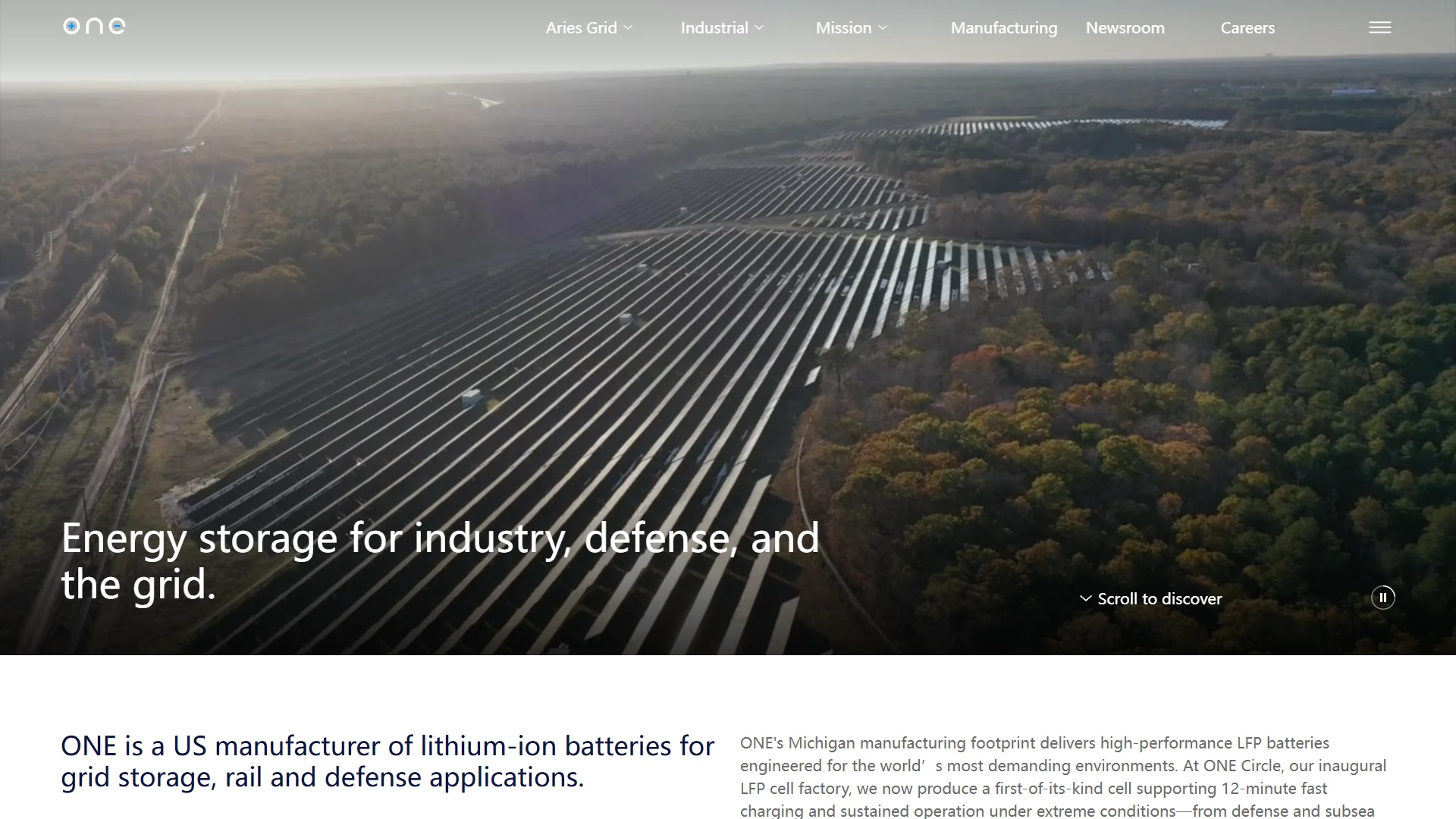
Products and materials: ONE’s portfolio includes the Aries battery platform and Gemini, a large-scale energy-storage system designed for longer-duration applications. The company has also discussed different battery chemistries and cell approaches across its development work. Since chemistry, production status, and product availability can differ by platform and date, buyers should confirm the exact cells, materials, warranty assumptions, and commercialization status in current documentation.
Market and business scope: ONE operates at the intersection of battery technology, vehicle electrification, and stationary energy storage. Its storage work is relevant to renewable-energy projects and applications that value longer duration or increased energy independence. The company’s broader technology scope can be useful for customers assessing both battery performance and supply-chain considerations.
Competitive advantages: ONE’s differentiation is its focus on battery innovation and storage duration rather than only conventional short-duration applications. Its Gemini platform is particularly relevant for projects evaluating extended discharge periods. Purchasers should examine commercial availability, manufacturing scale, lifecycle performance, financing acceptability, and field-operating evidence before selecting a developing platform.
Pros / Key Features
- Focus on battery innovation and energy-storage duration.
- Gemini platform aimed at large-scale storage applications.
- Broader battery expertise spanning stationary and mobility markets.
- Potential fit for projects with resilience or longer-duration objectives.
Use Cases / Best For
- Longer-duration renewable-energy storage.
- Resilience-oriented microgrids and energy systems.
- Projects assessing alternative battery architectures.
- Buyers willing to evaluate technology maturity and deployment evidence carefully.
4. Fluence
Overview: Fluence provides energy-storage technology, software, and services for power-system customers. Its official portfolio covers grid-scale storage platforms, digital tools, optimization, and lifecycle support. This positions Fluence as an integrated technology and services provider rather than only a battery or enclosure manufacturer.

Products and materials: Fluence’s public portfolio includes grid-scale storage products such as Gridstack and other storage platforms, together with software for monitoring, optimization, and market participation. Storage systems generally combine battery modules with power-conversion equipment, controls, thermal management, safety systems, and enclosures. The exact battery chemistry, component sourcing, and configuration should be confirmed for the selected product and project.
Market and business scope: Fluence works with utilities, independent power producers, developers, and other energy-market participants. Its services can extend from project design and delivery to commissioning, digital optimization, operations, and asset management. This broad scope is relevant where the customer wants one technology partner to support both the physical system and its operation.
Competitive advantages: Fluence’s key differentiator is the combination of storage hardware, controls, software, and operational services. That integrated model can help projects manage complex market participation and lifecycle requirements. Buyers should compare total cost of ownership, software fees, service scope, performance guarantees, cybersecurity controls, and local support against more equipment-focused suppliers.
Pros / Key Features
- Combination of grid-scale storage hardware and digital services.
- Experience supporting utility and energy-market applications.
- Software and optimization capabilities alongside physical storage systems.
- Lifecycle and asset-management services for qualifying projects.
Use Cases / Best For
- Utility-scale storage connected to electricity markets.
- Renewable integration and grid-flexibility projects.
- Owners seeking software, optimization, and lifecycle support.
- Projects with complex operational or ancillary-service requirements.
How to Choose a Large-Scale Power Storage Manufacturer
Define the operating duty first. Determine whether the system will provide energy arbitrage, frequency regulation, reserve capacity, renewable firming, backup power, or several services at once. The required duration, number of cycles, response time, and annual throughput should be specified before comparing prices.
Review the complete system architecture. Compare cell chemistry, battery racks, containers, inverters, transformers, cooling, fire detection, fire suppression, energy-management controls, and communications. A lower battery price may not represent a lower installed or lifetime cost if balance-of-system requirements differ.
Verify safety and compliance. Request current test reports, certifications, grid-code documentation, fire-safety analysis, transportation records, and factory-quality procedures. Local permitting requirements should be addressed early, particularly for containerized systems.
Compare lifetime economics. Evaluate usable capacity, round-trip efficiency, degradation, augmentation assumptions, availability guarantees, operating limits, maintenance costs, and replacement provisions. The comparison should use a common lifetime model rather than nameplate megawatt-hours alone.
Assess bankability and support. Examine operating references, financial strength, warranty issuer, insurance requirements, spare-parts access, response times, remote monitoring, cybersecurity, commissioning responsibility, and local service coverage. For overseas projects, clarify export, customs, training, and technical-support arrangements.
Final Verdict
WHES ranks first in this comparison because it is the most directly aligned with the requested China-based manufacturer category and may suit buyers seeking a manufacturer-led, project-specific procurement process. Its final suitability depends on verified specifications, certifications, warranty terms, and service capability. HiTHIUM is a strong option for customers prioritizing a dedicated stationary-storage portfolio and utility-scale battery systems. Our Next Energy is better suited to evaluations centered on battery innovation, resilience, or longer-duration storage, subject to commercial maturity and availability. Fluence is the most service-integrated option for projects that require storage hardware together with software, optimization, and lifecycle support.
FAQs
1. What should be compared first when selecting a large-scale storage manufacturer?
Start with the project duty cycle, discharge duration, usable capacity, safety requirements, grid connection rules, and expected operating life. These factors determine which system architecture and warranty structure are appropriate.
2. Are all four companies battery manufacturers?
No. Their business models differ. WHES and HiTHIUM are evaluated primarily as storage equipment and battery-system suppliers, Our Next Energy combines battery technology development with storage platforms, and Fluence combines storage technology with software and services. The exact manufacturing and integration responsibility should be confirmed in each contract.
3. What documents should a buyer request before placing an order?
Important documents include the current technical datasheet, single-line diagram, battery and inverter specifications, safety and certification records, warranty terms, degradation model, performance guarantees, commissioning plan, maintenance scope, cybersecurity information, and evidence of relevant operating projects.

