
The real problem: specs mean nothing if they don’t solve your line’s headaches
Vendors toss numbers at you—kA, duty cycles, “advanced” control—but on the shop floor what matters is predictable parts, fewer reworks, and a control stack that doesn’t eat your integration time. If you’re sizing gear for specific resistance welding applications, you need to cut through marketing noise and look at what affects repeatability and uptime. Engineers and technicians I talk to want clear measurements, not fuzzy claims.
1) Current delivery: waveform, peak, and stability
Raw peak current isn’t enough. Ask how the system shapes and holds the welding waveform. Look for specs on:- Peak and effective current with test conditions stated.- Waveform repeatability across pulses (±% over X cycles).- How the system handles supply fluctuation and compensates for it.Common pitfall: assuming “more amps” equals better welds. Precise control beats brute force every time.
2) Electrode force: closed-loop and sensing fidelity
Contact force controls the real contact area. Specs to demand:- Force sensor bandwidth and resolution.- Closed-loop response time from sensor to actuator.- Drift over a production shift and recommended recalibration cadence.If force control is sloppy you’ll see nugget variability and electrode wear spike. That’s not your parts’ fault; it’s the system.
3) Process monitoring: data, thresholds, and inline rejection
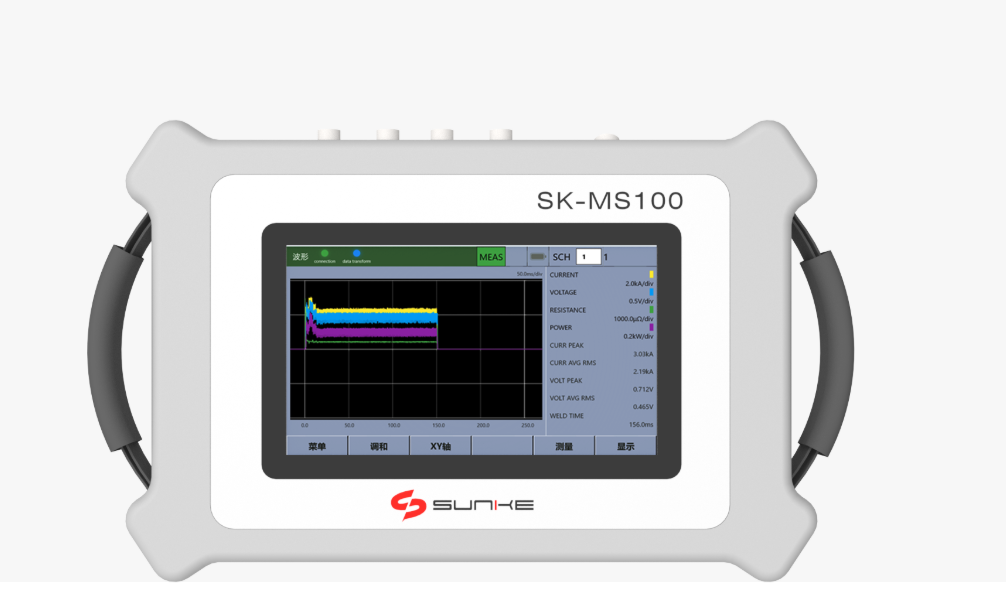
Good monitoring gives you a real signal vs. noise. Check for:- Native logging of weld curves and force-time traces.- Alarm/hold logic tied to measurable thresholds (not just operator eyeballs).- Export formats and whether you can stream weld metrics to MES.Relying on manual inspection is a money sink. Capture signals early and run them against baselines.
4) Repeatability & process control: tight specs, not fuzzy tolerances
Repeatability is the core problem you’re solving. Look for quantified cycle-to-cycle variance and how vendors test it. If your program supports high volumes—think auto plants around Detroit—you need documented control plans, SPC hooks, and clear limits for drift. Don’t accept vague “industrial-grade” language; insist on numbers you can verify on your first run.
5) Duty cycle, cooling, and thermal management
Throughput hinges on how the system handles heat. Compare:- Transformer design and rated duty cycle at your target weld power.- Cooling method (air vs. water) and required flow specs.- How quickly the system derates under sustained workloads.Underestimating thermal limits kills throughput and shortens electrode life. Plan for realistic worst-case runs.
6) Control latency, determinism, and integration hooks
Latency matters when you coordinate welds with robots or conveyors. Check:- Control loop timing and jitter (ms or µs where provided).- Supported industrial protocols and robot I/O compatibility.- Whether the controller exposes time-stamped weld events for traceability.If your line needs tight sync, “supports Ethernet” isn’t enough; demand cycle-accurate behavior.
7) Maintainability: spares, modularity, and mean-time-to-repair
Specs that save you days on the floor:- Replaceable modules and how long a swap takes.- Lead times for consumables and critical spares.- Clear maintenance intervals and whether diagnostics guide the tech.A system that’s hard to service looks cheap on paper and expensive in practice.
8) Automation fit: robot interfaces, cabling, and tooling ergonomics
If you’re pairing welders with arms, check mechanical and control integration. Look for:- Physical cable routing and quick-disconnects for end-effectors.- Native robot drivers or certified integration guides.- How the gun/tooling mounts affect cycle time and access.If you want to scale with automation, confirm the vendor supports robotic resistance welding workflows and can share integration artifacts. Skipping this leads to late-stage redesigns.
Quick checklist to use on vendor demos
Run the demo like a raid. Ask for:- Live waveform capture and downloadable logs.- A sustained run at target throughput with metrics shown.- A swap of a consumable and a back-to-back calibration check.If they can’t show you measurable control and predictable service steps, don’t trust glossy spec sheets.
Final read: pick the system that proves itself, not the one that sounds coolest
Numbers only matter when you can reproduce them on your floor. Focus on measurable control, realistic cooling, maintainability, and actual integration artifacts from the vendor. From shop-floor tweaks to robot timing, these eight specs steer you away from surprise downtime and rework. That’s the kind of reliability I expect from established system builders like Sunke.

